

Logistics Engineering and Management M. Sc.
The Master of Science (MSc) in Logistics Engineering and Management programme is crafted in consultation with academic and industry experts to equip the next generation of supply chain leaders with the competencies to design, develop, and implement efficient, effective, economically sustainable supply chain ecosystems that are in tune with the global landscape’s current and emerging demands.
The programme integrates the fields of supply chain management, logistics, engineering, and management, providing students with a broad spectrum of knowledge and cross-functional skills. This programme empowers students to plan, organise, and control the international flow of goods in a dynamic world. The Master is conducted under TUM Asia in Singapore.
| Type of Study | Full Time | Main Locations | TUM Asia Campus in Singapur |
| Standard Duration of Studies | 4 Semester | Application Period | Winter Semester: 01.10. – 31.03. |
| Credits | 120 ECTS | Required Language Proficiency | English |
| Start of Degree Program | in August | Costs | Tuition Fees |
The programme offers students an opportunity to take an in-depth study through the lens of transport and logistics systems. The insights will foster the critical discourse necessary to deepen their understanding of the limitations of the current methodological approaches to address global logistics challenges.
Anchored in scientific rigour and industry insights, the MSc in Logistics, Engineering and Management programme draws connections between traditional disciplines of logistics and multiple interrelated disciplines of environmental science, sociology, and economics that equip students with the foresight and business acumen to orchestrate strategies that are highly sensitive to the currents of the landscape the supply chain is operating in.
Whether is it operating the high-stakes logistics in healthcare industry or managing fast-moving consumer goods logistics in the consumer industry, graduates are not only knowledgeable of the unique characteristics of each industry, but they are also well equipped to command appropriate mathematical modelling approaches and computer-based solutions to integrate the transport, storage and handling of goods and products throughout the process of manufacturing, distribution, consumption and disposal.
Graduates will be able to work in the following areas (but not limited to): Procurement Specialist, Supply Chain Analyst, Logistics and Distribution Engineer, Inventory Analyst, Process Engineer, Managing Director Logistics, Supply Chain Solutions Architect, Supply Chain Manager, Warehouse Design and Management Planner.
Students of the English-language Master’s program in Logistics Engineering and Management (M.Sc.) at TUM Asia learn to plan, organize, and control international flows of goods in a dynamic world. The program combines aspects from the fields of supply chain management, logistics, engineering and management. Students deal with methods of statistics, modelling and predictive analytics, traffic planning, with the optimization of decision-making processes, as well as all facets of logistics and supply chain management. They thus acquire a broad set of skills that they can expand according to their interests and career plans with technical and non-technical elective modules in areas such as Green Supply Chain and Risk Management, Airport and Harbour Design, or Business Administration.
Graduates of the degree program are experts in the design, development, and implementation of efficient, effective, and economically sustainable supply chain systems that are in tune with the global landscape’s current and emerging demands. They are therefore excellently qualified to continue their academic work within the framework of a dissertation as well as for responsible positions in areas such as procurement, inventory analysis, supply chain management, warehouse design, logistics engineering, or process engineering.
Study Structure
The MSc in Logistics Engineering and Management, totalling 120 ECTS, spans 4 semesters over 2 years, comprising a combination of core and elective modules (75 ECTS), a 3-month internship (15 ECTS), and a Master’s thesis (30 ECTS).
Course Content
Awarded by TUM, the M.Sc. in Logistics Engineering and Management programme is a two-year full-time research and application-focused programme (120 credits) comprising 15 modules (eleven core modules and four elective modules). At the final stage of the study, students are required to do an industrial internship and write a master thesis.
Students will learn in-depth the latest mathematical modelling approaches and computer-based support solutions, cutting through multiple sacks of disparate data to deploy real-time tracking, predictive analytics, and enhanced decision-making to address formal problem models and achieve an efficient supply chain system.
The Students deep dives into the planning, designing, and managing of a logistics system for materials and goods while cultivating a deep understanding of the dynamics in transport and logistics, which is essential to developing an effective supply chain system for the flow of goods and materials in the whole value chain.
Focusing on strategies to optimise the economic value of supply chains in the human, digital, and resource areas, students will gain the know-how to empower people, mobilise resources, and leverage technology to increase productivity and respond to the shifting environment to implement an economically sustainable supply chain.
For information about the course structure please refer to this page and click on “Course Structure” or download the programme brochure here: Programme brochure
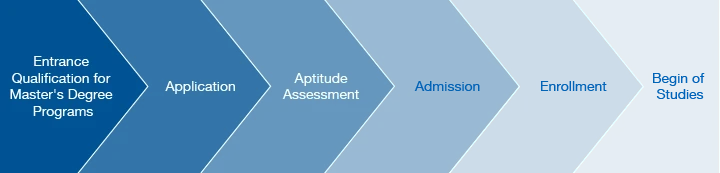
Online applications are submitted via the TUMasia application portal.
Instructions for applying for a master's program: Detailed information on the application process (step-by-step instructions)
The legal basis for the application is the Subject Examination and Study Regulations (FPSO).
To be eligible for the programme, you must have at least a Bachelor’s Degree in Logistics, Supply Chain Management, Business Administration, Civil Engineering, Transportation Engineering, Electrical Engineering, Geodetics, Mechanical Engineering, Geography, Computer Science, Communications Engineering, Economics, Mathematics, Physical Sciences, Architecture, Environmental Engineering, Tourisms or a closely related discipline.
The language of instruction for this program is English. Applicants whose native language is not English must demonstrate proficiency through an acknowledged language test such as:
• Test of English as a Foreign Language (TOEFL): a score of at least 88 points (Institution Code: 7368)
• International English Language Testing System (IELTS): a score of at least 6.5, not older than two years
For more information on the application procedure and required documents, please visit TUM Asia’s website.