

Geodesy and Geoinformation M. Sc.
Whether we are looking at our planet from satellites or from the ground, studying the effects of climate change, surveying mountain ranges or creating digital twins: Geodesists use digital maps and virtual images to observe natural processes and man-made changes on the Earth's surface. The interdisciplinary Master's program in Geodesy and Geoinformation offers a wide range of possible applications and excellent prospects for the future. Mathematics, computer science and natural sciences form the basis of this engineering education.
You can further deepen the factual and methodological knowledge you have already acquired by choosing individual specialisations and interests, such as engineering surveying, photogrammetry and remote sensing, earth surveying and satellite geodesy, cartography and geoinformatics, as well as land readjustment and land development. Nine specialisations offer flexible design options to shape individual interests in geodetic topics - experience this high flexibility of the Master's degree programme in Geodesy and Geoinformation at the Technical University of Munich!
| Type of Study | Full Time | Main Locations | TUM Campus Munich |
| Standard Duration of Studies | 4 Semester | Application Period | Winter semester: 01.04. – 31.05. |
| Credits | 120 ECTS | Required Language Proficiency | German, English |
| Start of Degree Program | Winter Semester | Tuition Fees | Semester fee, Fees for Students from Non-EU Countries |
The challenges in the areas of environmental protection, resource management and the development of urban and natural space make it necessary to collect and model reliable local and global computer-based geoinformation. After successfully completing the degree programme, you will have in-depth technical and methodological knowledge to link this spatial data and communicate it to society. You will model, visualise, use and interpret these data and you will be able to assess different sensors and evaluation methods in relation to the task. You are able to assess the effort and process of complex subject-specific questions and carry them out independently.
You are directly involved in current projects from research and industry and thus acquire practical experience. You will recognise interdisciplinary connections between the subfields of geodesy and its neighbouring disciplines, such as aerospace engineering, and systematically expand your knowledge beyond the subject boundaries. The content focus varies depending on the chosen study line, but all provide access to the entire spectrum of professional practice. Graduates find career opportunities within industry (automotive industry, aerospace, sensor technology, etc.), research, the public sector and in planning and engineering offices.
In addition to a deepened knowledge of the discipline and its methodologies, as a graduate you are distinguished by your focus on quality and your sense of responsibility. You possess a distinctive understanding of spatiality and far-reaching knowledge of the planning, collection, storage, evaluation, efficient computer-based modeling, visualization, use and interpretation of spatial information on all scales, from the local to the global. With reference to specific tasks, you can determine the applicability of various sensors and evaluative processes. You are in a position to assess the input and steps required to deal with complex, discipline-specific problems, and to carry out these steps independently. You participate directly in current purely research projects, as well as research projects conducted in industry, which already provide you with practical experience of successfully completing complex projects.
You recognize interdisciplinary connections between the various branches of geodesy and neighboring disciplines and systematically broaden your knowledge beyond the boundaries of your discipline. Students specialize in the course of the program in one of three areas: higher geodesy and satellite geodesy; photogrammetry, remote sensors and cartography; or, geodesy, geoinformatics and land management.
Opportunities for graduates of Geodesy and Geoinformation arise in research, as well as in different areas of public administration. Further options arise in various branches of the private sector. In addition to engineering consultancies, banks and insurance companies, this includes the areas of computer science, geographic information systems, photogrammetry, and spatial informatics, or the automobile and automation industries.
Study Structure & Content
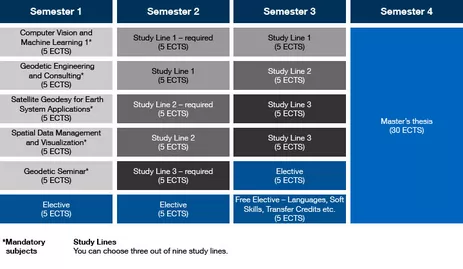
During the first semester, the program advances your fundamental knowledge of all areas of the discipline of geodesy and geoinformation, i.e. in the areas of higher geodesy and satellite geodesy, photogrammetry, remote sensors and cartography, as well as geodesy, geoinformatics and land management.
In the second and third semesters, you develop your knowledge of the discipline and its methodologies along the selected study lines. In addition to the selected compulsory program of the 3 study lines, students must also choose courses from the other selected study lines. Additional electives and research-related project work allow for further specialization.
The fourth semester is devoted to the Master’s thesis. It is here that your acquired knowledge and methodological competencies converge.
Subjects/Module: Basic module + 9 courses (Navigation and GNSS, Physical Geodesy and Earth System, Space Geodetic Techniques, Engineering Geodesy, Land Management, Geoinformatics, Cartography and Visual Analytics, Photogrammetry, Remote Sensing) + free interdisciplinary elective module catalogue
[Modulübersicht (Link zu TUMonline/pdf) - NICHT GEFUNDEN]
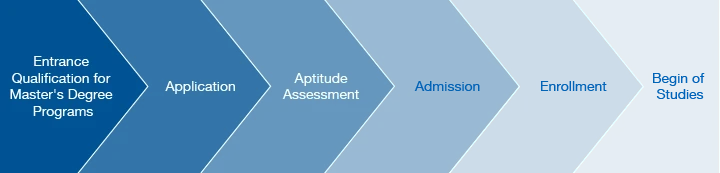
Application via TUMonline: Apply via the TUMonline application portal and upload your documents for admission there.
Support: Instructions for applying for a master's program (step-by-step instructions) and Application Info Portal
Legal Notice: The basis is the program-specific Academic and Examination Regulations (FPSO)
- Degree Certificate and Diploma or Subject and Grade Transcript of Studies to Date
- Transcript of Records
- Proof of English Language Proficiency
- Statement of purpose (Letter of Motivation)
- Complete and Current Résumé
- Passport
- if applicable: Proof of Internships or Professional Experience (optional)
- Preliminary Documentation (VPD) if the qualification for graduate studies (e.g. a Bachelor’s) was obtained outside Germany)
We may require additional documents depending on your educational background and your country of origin. Complete the online application to receive a comprehensive list of the required documents.
Please consider the specific requirements for documents for application and enrollment at TUM.
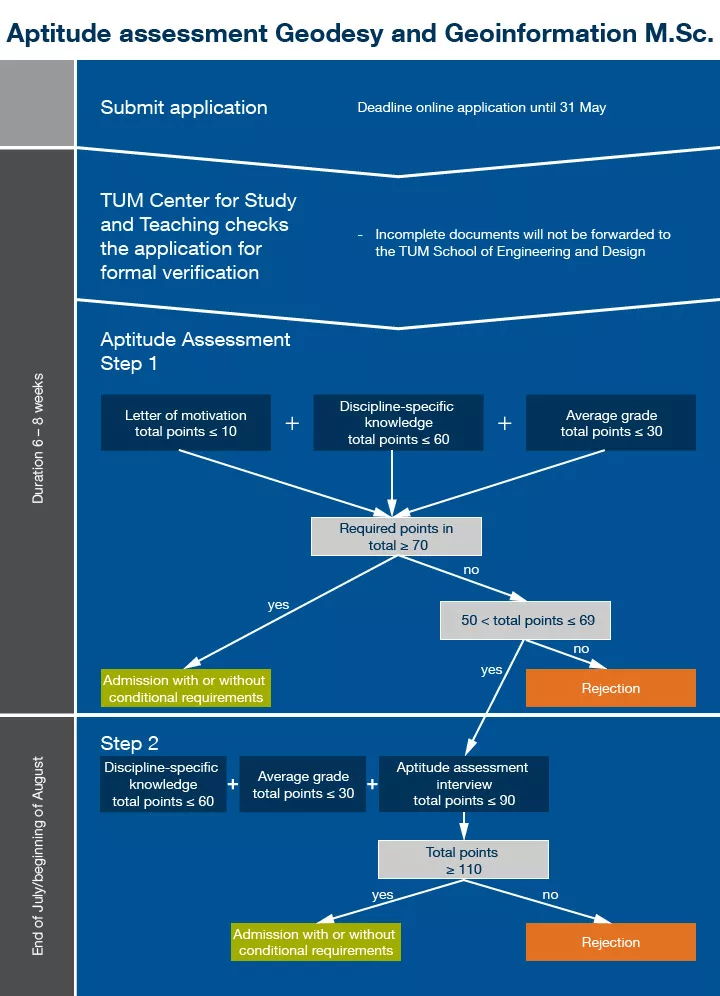
Selection takes place through an aptitude assessment procedure. The aptitude assessment is a two-part procedure after the submission of an official application to a program. In this procedure, the TUM school determines whether you meet the specific requirements for its Master’s degree program.
In the initial stages, the grades you obtained during your Bachelor’s program, as well as your written documents, will be evaluated using a point system. Depending on the amount of points accumulated, applicants are either immediately admitted, rejected, or invited to an admissions interview.
- Application for Enrollment (signed)
- Degree Certificate and Diploma (authentic document)
- Transcript of Records (authentic document)
- Most Current Photo (as for ID)
We may require additional documents depending on the type of educational background you earned and your country of origin. After accepting an offer of admission in TUMonline, you will receive a list of documents you must submit to TUM in hardcopy for enrollment.
Please consider the specific requirements for documents for application and enrollment at TUM.


On this page you will find all relevant information about semester structure, semester breaks, dates and deadlines at TUM.
Examination Dates
The examination dates for each semester can be viewed in TUMonline.
Winter semester 2025/26:
The dates for the individual examinations will be published in TUMonline until 24 October 2025. Then, you can view them there.
Summer semester 2026:
The dates for the individual examinations will be published in TUMonline until 24 April 2026. Then, you can view them there.
Please also follow TUMonline for possible room and date changes.
Registration and Deregistration for Examinations
| Registration period winter semester 2025/26: | 17 November 2025 - 15 January 2026 |
| Registration period summer semester 2026: | 18 May 2026 - 30 June 2026 |
The cancellation of your participation (de-registration) in an exam is possible until one week before the exam.
In order to take part in examinations, you must register independently via TUMonline. The registration takes place via your study status/curriculum. How to register for an examination in TUMonline.
The de-registration from examinations works the same way.
Please note:
- The examinations office ASG does not register you for exams once the registration period has closed. If you have failed to register for one or more exams, you will not be able to take these exams.
- No exams may be taken for the first time during a leave of absence. An exception is leave on grounds of maternity leave, parental leave or for the care of close relatives.
- However, repeat exams can be taken.
Repeating examinations:
- Module examinations can be repeated as often as required, taking into account the academic progress check (see § 10 (3) and (4) APSO, resp.).
- Only exams that have been previously failed can be retaken. It is not possible to retake an exam that has already been passed for the purpose of improving your grade.
- Please note that you must also register for a retake exam in TUMonline.
Disadvantage Compensation in examinations
Students are entitled to compensation for disadvantages in examinations if they have an impairment that impairs their studies and can be compensated for.
Compensation for disadvantages must be applied for from your board of examiners in good time before the start of the relevant examination phase. The application must be made informally in writing by e-mail to the examinations office ASG: examination.asg@ed.tum.de.
The application must be accompanied by meaningful (specialist) medical certificates or reports stating which impairment is involved and which measures are required to compensate for the disadvantage.
Please note that the board of examiners is not bound by the measures to compensate for disadvantages stated in your application or in the certificate or expert opinion.
The following deadlines apply for the application:
Winter semester and summer semester: By the end of the registration period for the respective semester's examinations at the latest.
Please note: If an application is submitted after this deadline, any approval of compensation for disadvantages will apply from the examination phase of the following semester at the earliest.
You can find further information and information sheets on the subject of "compensation for disadvantages" on the pages of the TUM Center for Study & Teaching.
You will also find an application form that you can use under the link above.
Withdrawal from an Examination
Withdrawal from an examination is only possible for valid reasons for which the student is not responsible. Such reasons include illness, accident, death in the family etc.
Please be sure to read the TUM's information on withdrawal regulations in the event of illness.
If you cannot participate in an examination, a written withdrawal application must be submitted immediately to the responsible examination board. This notice should be submitted by e-mail to: examination.asg@ed.tum.de
You can download the withdrawal application form here.
In addition to the application, proof of the reason preventing your participation in the examination must also be submitted without delay, e.g. a medical certificate in the event of illness.
The certificate must meet the following criteria:
- It must be issued by a qualified doctor.
- Generally, it must be based on an examination carried out on the day on which you claim to be unable to take the exam.
- It must state the start and end dates of your inability to take the exam due to illness.
- It must clearly state why you are unable to take the exam so that the board of examiners can determine whether you were actually unable to take the exam on the day of the exam (e.g., necessary bed rest or inability to travel to the exam location and/or take the exam there without significant discomfort).
Important:
- Confirmation of inability to take the exam alone is not sufficient.
- The certificate does not need to contain a medical diagnosis.
- If you are being treated as an inpatient in a hospital on the day of the exam, a certificate from the hospital must be submitted.
- Certificates of incapacity for work (Arbeitsunfähigkeitsbescheinigung) are not sufficient.
Academic progress (hardship application)
If you can prove (with a valid medical certificate or other supporting documentation) that you were unable to complete your studies properly over a long period of time (possibly even an entire semester) for reasons beyond your control (illness, etc.), you can apply for an extension or suspension of the deadline of the academic progress check (§ 10 para. 7 APSO).
The reasons must be reported to the responsible board of examiners immediately. If you fail the academic progress check, you cannot retroactively cite long-term illness or other reasons if you did not report these to your board of examiners immediately.
As a rule, the study progress check can only be suspended once.
If the restrictions continue, you must inquire with the TUM Center for Study and Teaching - Application and Enrollment Department about the possibility of taking a leave of absence or interrupting your studies. You can also seek advice from the student advisory service or the secretary to the board of examiners of your degree programme.
The immediate notification of valid reasons has to be be sent informally to the ASG Examination Office: examination.asg@ed.tum.de
Important:
Medical certificates must comply with TUM's legal requirements. Information on the formal and substantive criteria for certificates can be found above under “Withdrawal from an examination.”
If a certificate does not meet these criteria, a corresponding hardship application must be rejected.
Please note that you can only apply for a suspension or extension of the deadline if you were actually unable to meet the requirements of the academic progress check. You can see this by the notification “DF” in your study tree in TUMonline.
In this case, please send the appication informally by e-mail together with all necessary supporting documents (see above) to the examinations office ASG: examination.asg@ed.tum.de.
The board of examiners responsible for your degree program will decide on your application at its end-of-semester meeting. The decision will then be communicated to you in writing by the examinations office ASG as soon as possible.
Please refrain from making any prior inquiries regarding the status of your application.
Boards of Examiners Aerospace and Geodesy
According to § 29 APSO, the boards of examiners are responsible for conducting the examination procedure. They make all necessary decisions, unless the general academic examination regulations of TUM have assigned this responsibility to the respective examiners.
The boards of examiners' decision-making authority includes, in particular, applications for withdrawal from examinations, applications for suspension and extension of deadline, applications for recognition of credits as well as applications for compensation of disadvantages in examinations.
The degree programmes of Aerospace and Geodesy has the following boards of examiners with their respective responsibilities:
| Board of examiners | degree program | secretary to the board |
| Aerospace | B.Sc. Aerospace M.Sc. Aerospace M.Sc. Aerospace Engineering (TUM Asia) | Ms. Pema Mauser-Sherpa Mr. Daniel Hartenstein Mr. Daniel Hartenstein |
| ESPACE | M.Sc. Earth Oriented Space Science and Technology | Mr. Daniel Hartenstein |
| Geodäsie und Geoinformation | B.Sc. Geodesy and Geoinformation M.Sc. Geodesy and Geoinformation B.Sc. Land Management (partial degree) M.Sc. Land Management and Geospatial Science | Mr. Daniel Hartenstein |
If you have completed parts of or an entire degree program at a university other than TUM, you can apply for recognition of credits. A prerequisite for the recognition of credits that were not achieved at TUM is the equivalence of the gained competences. This means that the knowledge and skills acquired outside of TUM must not be fundamentally different from the knowledge and skills conveyed in the corresponding modules at the TUM (basis for this is Art. 86 BayHIG and § 16 APSO).
Procedure of the recognition process:
- Submit the completed recognition form to the examinations office ASG. All additional documents required must be enclosed in accordance with the form (page 1) and checked for completeness by the student. Only complete documents can be processed.
- Your application with the documents will be forwarded to the module coordinator/subject examiner. They will decide on the equivalence of the already achieved credits with the credits to be achieved in your degree pgroamme at TUM.
You can find the recognition form in the wiki of your degree programme under "Documents and Forms".
Please note:
- You can apply for recognition of credits only after you have enrolled.
- An application for recognition of credits can only be made once and must be made within the first academic year. In order to ensure an appropriate planning of your studies, you should submit your application as soon as possible.
- In the case of credits from a semester abroad, recognition must be applied for within the semester following the stay abroad.
- The recognition procedure ends with the signing of the application by the responsible module coordinator. Information on recognition or rejection will be sent by e-mail. Applications cannot be re-submitted after the recognition procedure has been completed.
- Once recognition has taken place, a new application for recognition of credits claiming equivalence with a module other than the recognized competences is no longer possible. If the student claims equivalence of the competences to multiple different modules, this must be checked in the same application/recognition process. In this case, please use a separate form for each recognition process.
- If at least 30 credits are recognized as equivalent, you will be upgraded by one semester. If 52/82 credits are recognized, you will be upgraded by two/three semesters respectively.
Grade conversion:
If the grading system of examinations completed at universities or equivalent institutions of higher education and recognized by TUM does not match the TUM grading system, the grades of the other institution will be converted according to the so-called "Bavarian Formula". If such a conversion is not possible, the examination board will determine a corresponding ratio for the grade conversion.
Contact for credit recognition: examination.asg@ed.tum.de
Registration:
For final theses (= Bachelor’s thesis und Master’s thesis) registration and all administration take place in the ED portal at https://portal.ed.tum.de/en/Theses/
You find all important information in the wiki of the ED portal.
The supervising chair will register you for the thesis. You will then receive an e-mail asking you to confirm the registration of the thesis and the data provided in the portal. Only then will the registration be reviewed by the examination board and you will then receive the approval or rejection of the topic by e-mail.
All e-mails from the portal will be sent to your TUM e-mail address.
Submission:
The Bachelor's/Master's thesis is handed in digitally via the ED portal. For more information, see wiki of the ED portal.
Extension:
In the event of valid reasons for which you are not responsible (e.g. longer waiting time for technical equipment or software), you can apply to the respective examination board for an extension of the processing time. This is also done via the ED portal. For more information, see wiki of the ED portal.
Suspension due to illness:
The processing time is suspended for the duration of an illness. You are obliged to report an illness to the respective board of examiners immediately and to provide credible evidence of this in the form of a medical certificate. The report is also made via the ED portal in the same way as when applying for an extension (see above).
Please send the medical certificate in PDF format to examination.asg@ed.tum.de. The certificate must meet the same criteria as those set out above under “Withdrawal from an examination.”
Important: If the illness is not reported immediately—i.e., as soon as you realize that you are ill—the respective board of examiners must reject the suspension of the processing time.
When the grading process is complete, you can view the grade in TUMonline.
As soon as the assessment has been finally confirmed by the examiners, you receive the grade by e-mail. The grade and other details are then transferred from the School Office to TUMonline.
According to § 18 (11) APSO, the thesis has to be graded within two months.
Please note: You may not be on leave of absence during the entire time you are working on the thesis and must be duly enrolled by the time you hand in your thesis.
Important: Please read the guidelines for ensuring good scientific practice at TU München. Their knowledge is assumed when registering the thesis.
- Best possible in the 3rd semester (winter semester) through mobility window
- Possible exchange programme: 1:1 Programme with Technical University of Denmark
- More information: TUM Exchange
Release of 3D City Database v5

After more than four years of development, a team led by Prof. Thomas H. Kolbe has released version 5 of the 3D City Database (3DCityDB). This open-source 3D geodatabase is designed to store and manage semantic 3D city models and serves as a central component of urban digital twins, as well as for BIM integration and urban simulations. Graphic: Chair of Geoinformatics / TUM
First world map shows impact of the tidal pulse in coastal rivers

Researchers at TUM have created the first global atlas detailing the impact of tides on coastal rivers. The freely accessible map highlights regions at risk of flooding and provides a crucial foundation for flood protection in the context of climate change. Image: Tamlin Pavelsky