

Power Engineering M. Sc.
Die Gestaltung nachhaltiger Energiesysteme zählt zu den zentralen Herausforderungen unserer Zeit. Der Masterstudiengang Power Engineering qualifiziert Sie für eine aktive Rolle in der globalen Energiewende.
Die Transformation des Energiesektors gehört zu den größten technologischen Herausforderungen des 21. Jahrhunderts. Der Masterstudiengang Power Engineering an der Technischen Universität München (TUM) vermittelt Ihnen das technische und gesellschaftliche Rüstzeug, um diese Aufgabe aktiv mitzugestalten. In einem ganzheitlichen, englischsprachigen und international ausgerichteten Studienprogramm lernen Sie, wie zukünftige Energiesysteme ökologisch, bezahlbar und nachhaltig entwickelt und betrieben werden können.
Globale Erwärmung, begrenzte fossile Ressourcen und geopolitische Abhängigkeiten machen die Umstellung auf erneuerbare Energien unverzichtbar. Dafür braucht es Ingenieurinnen und Ingenieure mit fundiertem Fachwissen in elektrischen, thermodynamischen und mechanischen Systemen – und mit einem Verständnis für wirtschaftliche, ökologische und politische Zusammenhänge über kulturelle und territoriale Grenzen hinweg.
Die TUM steht mit ihrem Leitbild der Human-Centred Engineering für eine Technologieentwicklung im Dienst von Mensch und Gesellschaft. Der Masterstudiengang Power Engineering folgt diesem Anspruch und bildet Fachkräfte aus, die nicht nur technisch exzellent, sondern auch interdisziplinär und interkulturell agieren können – in internationalen Projektteams und in einem globalen Arbeitsumfeld.
Eckdaten
| Art des Studiums | Vollzeit | Standort | München, Garching |
| Regelstudienzeit | 4 Semester | Bewerbungszeitraum | 01.01. – 31.05. |
| Credits | 120 ECTS | Sprachnachweis | Englisch |
| Studienbeginn | Wintersemester (October) | Kosten | Semesterbeitrag: 85,00 € Studiengebühren für internationale Studierende |
Informationen zum Studium
Der Masterstudiengang Power Engineering an der Technischen Universität München vermittelt vertiefte ingenieurwissenschaftliche Kompetenzen im Bereich der elektrischen und mechanischen Energietechnik. Ziel ist es, Studierende zu befähigen, innovative und nachhaltige Energiesysteme zu verstehen, zu entwickeln und umzusetzen – sowohl zentral als auch dezentral.
Das Studium ist praxisnah und bietet zugleich große individuelle Gestaltungsmöglichkeiten:
- Im ersten Semester werden die Grundlagen in Elektrotechnik und Maschinenbau durch Kernmodule vertieft.
- Im zweiten und dritten Semester steht die fachliche Spezialisierung im Vordergrund. Studierende wählen aus einem breiten Angebot an Wahlmodulen und arbeiten in Forschungsprojekten an aktuellen Fragestellungen mit. Ein begleitendes Seminar fördert die wissenschaftliche Vertiefung und erlaubt die individuelle Schwerpunktsetzung. Ergänzend können Management- und Persönlichkeitskompetenzen durch interdisziplinäre Module erweitert werden.
- Im vierten Semester wird das Studium mit der Masterarbeit abgeschlossen, in der das erworbene Wissen auf eine komplexe energietechnische Fragestellung angewendet wird.
Die vermittelten Inhalte decken ein breites Spektrum ab – von klassischen Grundlagen bis zu zukunftsweisenden Technologien:
- Thermodynamik
- Strömungsmechanik
- Energiesystemanalyse und -modellierung
- Industrieprozesse und Regelungstechnik
- Leistungselektronik
- Energieinformatik
- Stromerzeugungstechnologien (fossil, nuklear, erneuerbar)
- Windenergie
- Stromübertragungssysteme
- Smart Grids
- Energiespeicherung
- Elektrische Maschinen
- Nachhaltige Mobilität
- Energiewirtschaft
Der Studiengang richtet sich an zukünftige Ingenieurinnen und Ingenieure, die nicht nur technisches Know-how mitbringen, sondern auch die gesellschaftlichen, ökologischen und wirtschaftlichen Rahmenbedingungen der Energiewende verstehen und aktiv mitgestalten wollen.
Als Absolventin oder Absolvent des Masterstudiengangs Power Engineering sind Sie bestens darauf vorbereitet, komplexe Aufgaben im Bereich der Energieerzeugung und -versorgung eigenständig zu bearbeiten. Sie verfügen über fundiertes technisches Wissen, methodische Sicherheit und interdisziplinäre sowie soziale Kompetenzen, die Sie für eine verantwortungsvolle Tätigkeit in Industrie, Forschung und Gesellschaft qualifizieren.
Fachliche Kompetenz
Sie erwerben vertiefte Kenntnisse in den zentralen Bereichen der elektrischen und mechanischen Energietechnik. Dazu gehören:
- Thermodynamische Grundlagen der Energietechnik
- Vergleich und Bewertung von Technologien zur Stromerzeugung (Wind, Wasser, Solar, Geothermie, fossile und nukleare Quellen)
- Komponenten moderner Energiesysteme (elektrische Maschinen, Energiespeicher, Leistungselektronik)
- Aufbau und Steuerung intelligenter Energienetze (Smart Grids)
- Konzepte zur nachhaltigen Energienutzung (z. B. Mobilität der Zukunft, Energie-Sharing)
- Internationale regulatorische, sozioökonomische und ökologische Rahmenbedingungen
- Grundlagen nachhaltiger technischer Entwicklung
Durch die Kombination von Kern- und Wahlmodulen können Sie individuelle Schwerpunkte setzen und Ihr Wissen gezielt erweitern.
Methodische Kompetenz
Im Rahmen von Laborpraktika, Seminaren, Forschungsprojekten und der Masterarbeit lernen Sie:
- eigenständig neues Wissen zu erschließen
- wissenschaftliche Fragestellungen zu entwickeln und zu bearbeiten
- technische Innovationen zu bewerten – sowohl hinsichtlich ihrer wissenschaftlichen Relevanz als auch ihrer ökologischen und ökonomischen Auswirkungen
- komplexe Systeme zu modellieren und zu analysieren
- interdisziplinäre Lösungsansätze zu entwickeln
Diese Fähigkeiten befähigen Sie dazu, in einem dynamischen und innovationsgetriebenen Umfeld erfolgreich zu agieren.
Soziale und interkulturelle Kompetenz
Der Studiengang ist international ausgerichtet und fördert gezielt die Zusammenarbeit in multikulturellen Teams. Sie erwerben:
- interkulturelle Kommunikationsfähigkeiten durch gemeinsame Projektarbeit mit internationalen Studierenden
- Einblicke in unterschiedliche Perspektiven auf die Energiewende – insbesondere im europäischen Kontext
- soziale Verantwortung und Reflexionsfähigkeit im Umgang mit den gesellschaftlichen Auswirkungen technischer Entwicklungen
- Teamfähigkeit und Führungskompetenz in interdisziplinären Projektgruppen
Zusätzliche Angebote wie das Buddy-Programm, Erasmus-Partnerschaften und EuroTeQ-Kurse erweitern Ihre internationale Erfahrung und fördern Ihre persönliche Entwicklung.
Der englischsprachige Masterstudiengang Power Engineering an der Technischen Universität München bereitet Sie auf eine internationale Karriere im Energiesektor vor – einem Bereich, der durch die globale Energiewende stark wächst und sich dynamisch weiterentwickelt.
Tätigkeitsfelder in Industrie und Wirtschaft
Absolvent:innen arbeiten in:
- Energieversorgungsunternehmen: z. B. Netzbetrieb, Integration erneuerbarer Energien, Speichertechnologien
- Kraftwerks- und Komponentenhersteller: Entwicklung, Planung und Optimierung von Energieanlagen
- Technologieunternehmen und Start-ups: Innovationen in Smart Grids, nachhaltiger Mobilität, Energieinformatik
- Beratungs- und Projektmanagementfirmen: Technische und wirtschaftliche Bewertung von Energieprojekten weltweit
Forschung und Wissenschaft
- Universitäten und Forschungsinstitute: Mitarbeit an Projekten zur Energietechnik, oft mit Möglichkeit zur Promotion
- Internationale Kooperationen: z. B. EU-Forschungsprogramme, Entwicklungshilfeprojekte im Energiesektor
Internationale Perspektiven
- Dank der internationalen Ausrichtung des Studiengangs und der englischen Unterrichtssprache sind Absolvent:innen besonders gefragt bei:
- Global agierenden Unternehmen
- Organisationen mit Fokus auf nachhaltige Entwicklung
- Projekten in Schwellen- und Entwicklungsländern
- Viele Absolvent:innen kehren nach dem Studium in ihre Herkunftsländer zurück und tragen dort aktiv zur Energiewende bei – oft in Zusammenarbeit mit deutschen oder europäischen Unternehmen.
Arbeitsmarktlage
- Hoher Bedarf an Fachkräften: Besonders in den Bereichen Elektrotechnik, Energietechnik, Digitalisierung und Nachhaltigkeit
- Schneller Berufseinstieg: Die meisten Absolvent:innen finden innerhalb weniger Monate eine qualifizierte Vollzeitstelle
- Vielfältige Karrierewege: Von Forschung über Industrie bis hin zu Politikberatung und Entrepreneurship
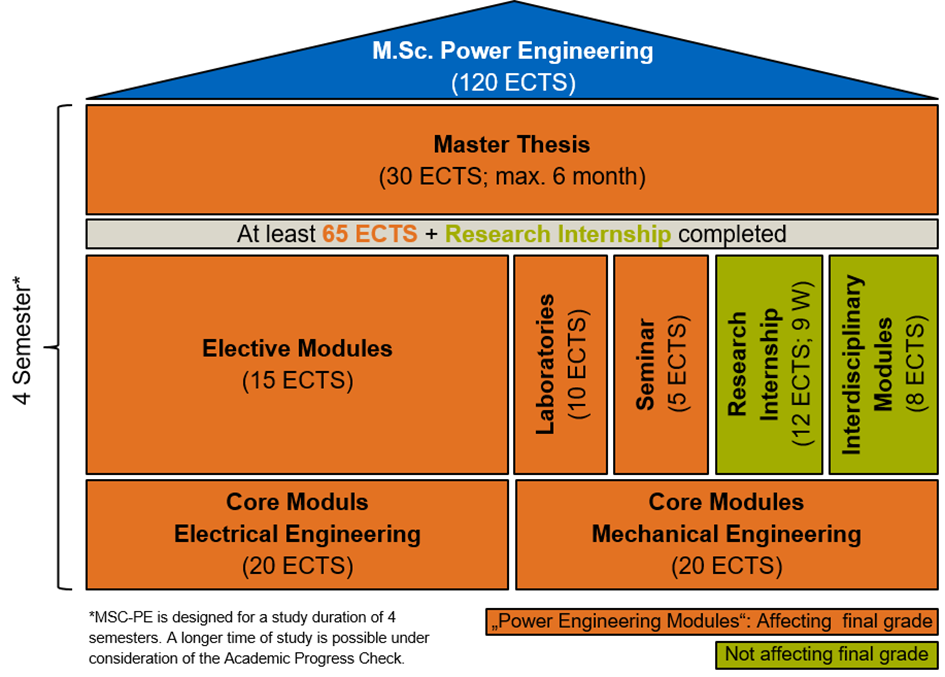
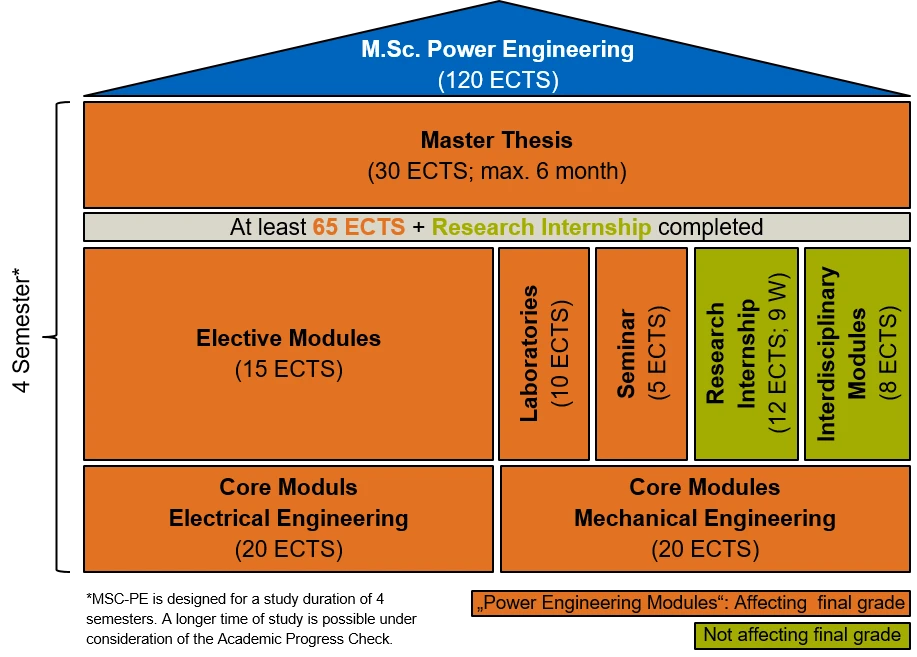
Der Masterstudiengang Power Engineering bietet neben dem Ausbau von Kernkompetenzen in den Bereichen Maschinenwesen und Elektrotechnik eine hohe Wahlfreiheit für die Studierenden. Ergänzt werden die Module durch eine Forschungspraktikum.
Im ersten und zweiten Semester werden die Vorkenntnisse der Studierenden aus unterschiedlichen Herkunftsdisziplinen durch Kernmodule aus den Bereichen Elektrotechnik und Maschinenwesen vertieft, beispielsweise in Thermodynamik, Hochspannungstechnik, Energiesysteme und Energiewirtschaft.
Das zweite und dritte Semester stehen im Zeichen der fachlichen Vertiefung und der individuellen Fokussierung durch Wahlmodule, etwa zu erneuerbaren Energietechnologien, thermischen Kraftwerken, Energiespeicherung, Windenergie und Bauingenieurwesen. In diesen Zeitraum fällt auch die neunwöchige Forschungspraxis, in deren Rahmen die Studierenden an aktuellen Projekten einer Lehr- oder Forschungseinrichtung mitarbeiten.
Ein Seminar vertieft die erworbenen Kenntnisse aus den Modulen und bietet die Möglichkeit zur weiteren Fokussierung auf ein spezielles Forschungsthema. Durch Module der außerfachlichen Ergänzung können Studierende ihre Persönlichkeitsentwicklung erweitern.
Das vierte Semester ist der Master’s Thesis gewidmet, in der das erlangte Fach- und Methodenwissen in der Bearbeitung einer umfangreichen Aufgabenstellung zusammenfließt.
Mehr Informationen
Bewerbung und Zulassung

Bewerbung über TUMonline: Bewerben Sie sich über das Bewerbungsportal TUMonline und laden Sie dort Ihre Zulassungsunterlagen hoch.
Unterstützung: Anleitung zur Bewerbung für einen Masterstudiengang (Schritt-für-Schritt-Anleitung) und Bewerbungsinfo-Portal
Rechtlicher Hinweis: Grundlage ist die studiengangspezifische Fach- und Prüfungsordnung (FPSO)
Termine & Fristen Bewerbung Wintersemester 2026
- Beginn der Bewerbungsphase (Öffnung des Bewerbungsportals): 01. Januar 2026
- Bewerbungsschluss TUM Test Power Engineering 2026 *: 21. Januar 2026
- Versand der Zugangsdaten TUM Test Power Engineering 2026 *: 23. Januar 2026
- Probelauf TUM Test Power Engineering 2026*: 23. bis 29. Januar 2026, 12 Uhr mittags deutscher Zeit (UTC+1)
- TUM Test Power Engineering 2026 *: 29. Januar 2026, 14 Uhr deutscher Zeit (UTC+1)
- Versand der TUM Test Power Engineering 2026-Zertifikate *: bis zum 7. Februar 2026
- Empfohlene Bewerbungsfrist (insbesondere für Nicht-EU-Bewerber aufgrund von Visumsangelegenheiten): 15. März 2026
- Endgültige Bewerbungsfrist: 31. Mai 2026
* : nur für Drittstaatsangehörige außerhalb des Geltungsbereichs des „Lissabonner Übereinkommens”
Fehlende Unterlagen können nach Ablauf der endgültigen Bewerbungsfrist nicht mehr nachgereicht werden. (Ausnahme: Wenn die Erstellung des VPD-Dokuments noch nicht abgeschlossen ist, laden Sie bitte stattdessen eine Bestätigung hoch, dass Sie das VPD-Dokument angefordert haben, und reichen Sie das VPD-Dokument über das Bewerbungsportal ein, sobald Sie es erhalten haben.)
Anrechnung früherer Studienleistungen
Die Prüfung der Anrechenbarkeit von Modulen aus Ihrem bisherigen Studium für den MSC-PE kann erst nach vollständiger Immatrikulation an der TUM, d. h. zu Beginn des ersten Semesters, erfolgen. Eine vorläufige Prüfung oder Anrechnung während Ihrer Bewerbungsphase ist nicht möglich.
Sie können zum Masterstudiengang Power Engineering zugelassen werden, wenn …...
Sie über einen Bachelorabschluss mit der Note H+ (Anabin) oder einen gleichwertigen Abschluss in Elektrotechnik oder Maschinenbau mit Schwerpunkt Energietechnik und sehr guten Noten verfügen.
... Sie den TUM-Test M.Sc. Energietechnik mit mindestens 39 Punkten bestanden haben (gilt nur für Bewerber außerhalb des Geltungsbereichs des „Lissabon-Übereinkommens“). Das Testergebnis darf jedoch nicht älter als 42 Monate sein.
Anabin-Bewertung herausfinden: anabin.kmk.org/no_cache/filter/institutionen.html
- Klicken Sie auf „Suchen nach Institution”.
- Wählen Sie unter „Länder” das Land Ihrer Universität aus, an der Sie Ihren Bachelor-Abschluss erworben haben, und bestätigen Sie mit „Länderauswahl bestätigen”.
- Wählen Sie unter „Orte“ die Stadt Ihrer Hochschule aus
- Alle Einrichtungen/Hochschulen in der ausgewählten Stadt werden in der Tabelle darunter angezeigt.
- In der Spalte „Status“ finden Sie die Bewertung der Hochschule.
- Die Fachkenntnisse der Bewerber werden im Rahmen einer Eignungsprüfung geprüft.
Besonders wichtig sind hervorragende Fachkenntnisse in den Bereichen Elektrotechnik und Maschinenbau, vorzugsweise im Bereich Energietechnik. Grundsätzlich werden daher alle Bewerber berücksichtigt, die diese Kenntnisse nachweisen können, unabhängig von der Bezeichnung des Bachelor-Studiengangs, in dem diese Kenntnisse erworben wurden.
Bewerber, die ihre Eignung für den Masterstudiengang Power Engineering in einem früheren Bewerbungsverfahren nicht nachweisen konnten, können sich einmalig erneut bewerben.
Informationen zu den Anforderungen an die Englischkenntnisse finden Sie hier: Nachweis der Englischkenntnisse
Besondere Bewerbungsbedingungen für bestimmte Länder
Für Bewerber außerhalb des Geltungsbereichs des „Lissabonner Übereinkommens“ (Drittstaatsangehörige) wird die Zulassungsentscheidung in Stufe 1 auf der Grundlage des Ergebnisses eines schriftlichen Online-Eignungstests der TUM für Energietechnik getroffen.
Wenn Sie Ihren Hochschulabschluss (z. B. Ihren Bachelor) nicht an einer deutschen Hochschule erworben haben, müssen Sie vor der Bewerbung an der TUM eine Vorabprüfung (VPD) über uni-assist beantragen. Dies gilt auch für Hochschulabschlüsse, die in EU-/EWR-Ländern erworben wurden.
Darüber hinaus müssen Bewerber aus bestimmten Ländern/Provinzen besondere Bedingungen erfüllen (z. B. APS-Zertifikat). Bitte überprüfen Sie unter diesem Link, ob dies für Sie relevant ist.
Wechsel des Studienfachs oder Studiengangs
Wenn Sie bereits in einem Masterstudiengang an der TUM eingeschrieben sind und das Studienfach oder den Studiengang wechseln möchten, finden Sie hier weitere Informationen.
Einzelheiten zu den einzureichenden Unterlagen entnehmen Sie bitte den Informationen im Bewerbungsportal TUMonline sowie dem Glossar der Unterlagen.
Bitte beachten Sie: Wenn Sie noch nicht über alle Unterlagen verfügen (z. B. VPD), können Sie die Bewerbung dennoch über TUMonline vorbereiten und einreichen und die fehlenden Unterlagen bis zum Bewerbungsschluss in TUMonline nachreichen.
Nachfolgend finden Sie weitere Informationen zu diesen Dokumenten.
TUM-Test Energietechnik-Zertifikat
Bewerber für den Masterstudiengang Power Engineering, die ihren Bachelorabschluss in einem Land außerhalb des Geltungsbereichs der „Lissabonner Konvention“ erworben haben, müssen den erfolgreichen Abschluss eines TUM-Tests Energietechnik nachweisen. Bitte beachten Sie: Entscheidend ist das Land, in dem Sie Ihren Bachelorabschluss erworben haben, und nicht Ihre Staatsangehörigkeit.
Bitte beachten Sie: Im TUM-Bewerbungsportal werden Sie aufgefordert, eine „Benachrichtigung über die erfolgreiche Teilnahme am TUM-Test Power Engineering mit einer Mindestpunktzahl von 33 Punkten” hochzuladen. Die 33 Punkte sind jedoch nur eine formal erforderliche Mindestpunktzahl, damit Ihre Bewerbung angenommen wird. In der anschließenden Eignungsprüfung sind mindestens 39 Punkte erforderlich, um als für den Studiengang geeignet eingestuft zu werden.
APS-Zeugnis („Zeugnis des Akademischen Bewertungszentrums”)
Bitte überprüfen Sie hier, ob Sie ein APS-Zeugnis vorlegen müssen. Das APS-Zeugnis ist für die Bewerbung für die VPD erforderlich.
VPD („Vorprüfungsdokumentation“) – Vorläufige Prüfung der Unterlagen für ausländische Bewerber
Alle Bewerber, deren Zugangsberechtigung nicht an einer deutschen Hochschule erworben wurde, müssen ihre Unterlagen von uni-assist bearbeiten lassen. Dies gilt auch für Zugangsberechtigungen, die in EU-/EWR-Ländern erworben wurden. Uni-assist erstellt eine vorläufige Prüfung der Unterlagen (VPD), die feststellt, ob Bewerber für ein Masterstudium in Deutschland qualifiziert sind.
Sie müssen eine VPD einreichen, die speziell für Ihre Bewerbung an der TUM ausgestellt wurde. Eine VPD, die für eine Bewerbung an einer anderen deutschen Hochschule ausgestellt wurde, wird für Ihre Bewerbung an der TUM nicht akzeptiert. Wenn Sie sich jedoch für mehr als einen Studiengang an der TUM bewerben möchten, reicht es aus, eine TUM-spezifische VPD zu beantragen.
Ihre VPD wird an der TUM unbegrenzt lange akzeptiert, solange sich keine Änderungen an der Master-Zulassungsvoraussetzung ergeben haben.
Wenn das Bachelorstudium zum Zeitpunkt der Bewerbung für den MSC-PE noch nicht abgeschlossen ist, basiert die VPD auf den bis dahin erbrachten Studienleistungen.
Um die VPD zu beantragen, reichen Sie bitte Ihre Unterlagen innerhalb der entsprechenden Bewerbungsfrist bei uni-assist e.V. ein. Bitte senden Sie Ihr VPD umgehend nach Erhalt an die TUM weiter.
Weitere Informationen zum VPD finden Sie hier.
Bitte beachten Sie:
- Die Überprüfung Ihrer Unterlagen durch uni-assist gilt nicht als Bewerbung für die TUM. Sie müssen sich vor Ablauf der jeweiligen Bewerbungsfrist über TUMonline bei der TUM bewerben.
- Wenn Sie Fragen zur Beantragung eines VPD haben, wenden Sie sich bitte direkt an uni-assist. Wir können Ihnen diese Informationen nicht geben, da uni-assist eine von der TUM unabhängige Einrichtung ist.
- Wenn die Auswahloption für das entsprechende Wintersemester im UniAssist-Bewerbungsportal noch nicht vorhanden ist, wählen Sie bitte die Option für das vorherige Sommersemester.
Lebenslauf
Fügen Sie eine aktuelle (!) Version Ihres Lebenslaufs in Tabellenform bei. Achten Sie darauf, dass Ihre Ausbildung, Projekte und Berufserfahrung klar angegeben sind. Der Lebenslauf sollte nicht länger als zwei (maximal drei!) Seiten sein.
Zeugnis
Es ist nicht erforderlich, dass Sie Ihr bisheriges Studium zum Zeitpunkt der Bewerbung für den MSC-PE vollständig abgeschlossen haben. Sie müssen jedoch mindestens 150 Credits in Ihrem bisherigen Studiengang erworben haben. Bitte reichen Sie Ihr aktuelles Zeugnis ein. Ihre Gesamtnote (CGPA) und das Benotungssystem sollten klar ersichtlich sein.
Dieses Dokument muss als beglaubigte Kopie hochgeladen werden. Weitere Informationen finden Sie auf der Hauptseite der Bewerbungsvoraussetzungen.
Wenn das Originaldokument nicht in deutscher oder englischer Sprache ausgestellt wurde, müssen Sie zusätzlich eine beglaubigte Kopie der Übersetzung (ins Deutsche oder Englische) hochladen. Es reicht jedoch nicht aus, nur die Übersetzung einzureichen.
Nachweis der Englischkenntnisse
Informationen zum Nachweis der Englischkenntnisse finden Sie unter dem folgenden Link. Beachten Sie insbesondere die Informationen unter „Verification of English Skills by Language of Instruction” (Nachweis der Englischkenntnisse durch Unterrichtssprache). https://www.tum.de/en/studies/application/application-info-portal/admission-requirements/language-certificates
Nachweis der Deutschkenntnisse → Optional
Während Ihres Studiums können Sie Deutschkenntnisse erwerben, z. B. durch die Teilnahme an Vorlesungen in deutscher Sprache oder durch einen speziellen Deutschkurs am TUM Language Center.
GRE (Graduate Record Examination) / GATE (Graduate Aptitude Test in Engineering) / AWA (Analytical Writing Assessment) → Alle optional
Kopie der GRE-/GATE-/AWA-Zertifikate.
Die Eignungsprüfung für MSC-PE umfasst zwei Stufen.
Bitte beachten Sie: In Stufe 1 der Eignungsprüfung wird zwischen Bewerbern unterschieden, die ihren Bachelor-Abschluss in einem Land innerhalb oder außerhalb des Geltungsbereichs des „Lissabon-Übereinkommens” erworben haben. Bewerber, die ihren Bachelor-Abschluss in einem Land außerhalb des Geltungsbereichs des „Lissabon-Übereinkommens” erworben haben, werden im Folgenden als „Drittstaatsangehörige” bezeichnet. Bitte beachten Sie: Entscheidend ist das Land, in dem Sie Ihren Bachelor-Abschluss erworben haben, und nicht Ihre Staatsangehörigkeit als Person. In Stufe 1 der Eignungsprüfung müssen Drittstaatsangehörige einen gültigen Nachweis über das Bestehen des TUM-Tests Power Engineering mit einer Punktzahl von mindestens 39 Punkten vorlegen (das Testergebnis darf nicht älter als 42 Monate sein). Bitte prüfen Sie daher sorgfältig, ob das Land, in dem Sie Ihren Bachelor-Abschluss erworben haben, das „Lissabonner Übereinkommen“ ratifiziert hat. Informationen hierzu finden Sie unter diesem Link https://www.coe.int/en/web/conventions/full-list?module=signatures-by-treaty&treatynum=165. Bitte beachten Sie, dass das Übereinkommen ratifiziert sein muss; eine bloße Unterzeichnung reicht nicht aus.
Stufe 1:
Für Drittstaatsangehörige
Bei Drittstaatsangehörigen wird das Ergebnis des TUM-Tests Power Engineering bewertet, bei anderen Staatsangehörigen werden die Note des Bachelor-Abschlusses und die bestandenen Fächer bewertet. In beiden Fällen beträgt die höchstmögliche Punktzahl 55 Punkte. Bewerber, die 45 Punkte oder mehr erreicht haben, werden direkt zugelassen. Bewerber, die weniger als 45 Punkte, aber mindestens 39 Punkte erreicht haben, werden zu einem Vorstellungsgespräch eingeladen (Stufe 2). Bewerber mit einer Testpunktzahl von weniger als 39 Punkten werden für das MSC-PE-Programm nicht berücksichtigt.
Für Nicht-Drittstaatsangehörige
Die Kriterien für Stufe 1 lauten wie folgt:
- Gesamtnote Ihres Bachelor-Abschlusses (max. 25 Punkte)
- Fächer Ihres Bachelor-Studiums, die für den MSC-PE relevant sind (max. 30 Punkte)
- Mathematik (max. 12 Punkte (entspricht mindestens 30 ECTS Credits aus mathematischen Modulen))
- Elektrotechnik (max. 9 Punkte (entspricht mindestens 45 ECTS Credits aus elektrotechnischenModulen)):
z. B. Schaltungstechnik, elektrische Felder und Wellen, Festkörperphysik und Bauelemente, Hochspannungstechnik, Energieübertragungstechnik, elektrische Maschinen - Maschinenbau (Energietechnik) (max. 9 Punkte (entspricht mindestens 45 ECTS Credits aus maschinenbaulichen Modulen):
z. B. Technische Mechanik, Thermodynamik, Strömungsmechanik, Wärme- und Stoffübertragung, Maschinendynamik
Stufe 2:
Bewerber mit weniger als 45 Punkten, aber mindestens 39 Punkten in Stufe 1 erhalten eine Einladung zu einem Vorstellungsgespräch.
Das Vorstellungsgespräch dauert in der Regel etwa 20 bis 30 Minuten und kann persönlich an der TUM oder per Videokonferenz durchgeführt werden.
Das Vorstellungsgespräch umfasst folgende Hauptthemen:
- Motivation für den MSC-PE (max. 15 Punkte)
- Fachkenntnisse und Fähigkeit zur wissenschaftlichen Arbeit (max. 30 Punkte)
- Kommunikationsfähigkeiten in englischer Sprache (max. 10 Punkte)
Für die Endnote der Stufe 2 wird der Mittelwert Ihrer Punktzahl im Vorstellungsgespräch und der Punktzahl der Stufe 1 berechnet. Die höchstmögliche Endnote beträgt somit 55 Punkte. Wenn Ihre Punktzahl in Stufe 2 mindestens 40 Punkte beträgt, erhalten Sie eine Zulassung.
Notenumrechner
Dieses Notenumrechnungstool ist zusammen mit der Studien- und Prüfungsordnung (FPSO) Ihres Studiengangs ein Hilfsmittel, mit dem Sie Noten, die Sie in anderen Ländern als Deutschland erworben haben, auf der Grundlage der „modifizierten bayerischen Formel” umrechnen können:
- Nmax = Höchstnote der ausländischen Notenskala
- Nmin = Mindestnote für das Bestehen der ausländischen Notenskala
- Nd = Im Ausland erzielte Note
- Z = Im deutschen Notensystem gesuchter Notenwert
Geben Sie die Höchstnote, die Mindestnote und Ihre in dem an Ihrer Universität verwendeten System erzielte Note ein.
Das Ergebnis ist Ihre entsprechende Note im deutschen System. Die Noten stehen für folgende Bewertungen der Prüfungsleistungen:
- – 1,5 „sehr gut“: hervorragende Leistung
- 1,6 – 2,5 „gut“: Leistung deutlich über dem Durchschnitt
- 2,6 – 3,5 „befriedigend“: durchschnittliche Leistung
- 3,6 – 4,0 „ausreichend“: Leistung entspricht trotz Mängeln den Standards
- Ab 4,1 „ungenügend“: Leistung entspricht aufgrund erheblicher Mängel nicht den Standards
Bitte beachten Sie: Dieses Tool dient nur zur ersten Orientierung und die Ergebnisse sind in keiner Weise verbindlich.
Bitte beachten Sie: Nur Bewerber für den Masterstudiengang Power Engineering, die ihren Bachelorabschluss in einem Land außerhalb des Geltungsbereichs des „Lissabonner Übereinkommens“ erworben haben, müssen einen Nachweis über die erfolgreiche Teilnahme an einem TUM Test Energietechnik erbringen.
Bewerbung & Zulassung
Alle Bewerber, die sich bis zum Anmeldeschluss für den TUM Test Power Engineering für einen Online-Bewerbungsaccount für den Studiengang M.Sc. Power Engineering registriert haben, werden zum TUM Test Power Engineering zugelassen. Mit anderen Worten: Die Registrierung eines Online-Bewerbungsaccounts für den Studiengang M.Sc. Power Engineering ist Voraussetzung für die Teilnahme am Test. Eine separate Anmeldung für den TUM Test Power Engineering ist nicht erforderlich. Informationen zur Registrierung eines Online-Bewerbungskontos finden Sie hier. Für die Anmeldung zum TUM Test Power Engineering ist es wünschenswert, aber nicht zwingend erforderlich, alle erforderlichen Dokumente im Bewerbungsportal hochgeladen zu haben. Bitte stellen Sie jedoch sicher, dass Sie das Online-Bewerbungskonto für den M.Sc. Power Engineering so weit ausgefüllt haben, dass Sie die Erstellung des Kontos mit dem Button „SENDEN” abschließen können. Bitte stellen Sie sicher, dass Sie alle Kontrollkästchen am Ende ausgewählt haben. Klicken Sie auf die Schaltfläche „Senden”. Der Status „Einreichung der Bewerbung” muss mit einem gelben „?”-Button gefolgt von einem Datum angezeigt werden (siehe Screenshot unten). Wenn Sie Probleme beim erfolgreichen Absenden Ihrer Bewerbung haben, wenden Sie sich bitte an studium(at)tum.de. Bitte beachten Sie, dass Sie zu diesem Zeitpunkt keine weitere Bestätigung über die Zulassung zum TUM Test Power Engineering erhalten.
Wenn Sie den TUM-Test „off campus” (z. B. von zu Hause aus) ablegen möchten, ist eine zusätzliche kostenpflichtige Registrierung (25 $) bei Proctorio erforderlich. Diese kostenpflichtige Proctorio-Registrierung erfolgt während der Teilnahme am obligatorischen Probedurchlauf des TUM-Tests Power Engineering.
Wenn Sie den TUM-Test „on campus” an einem TUM-Standort ablegen möchten, müssen Sie uns dies per E-Mail an pa.mscpe(at)ed.tum.de mitteilen.
Die vollständige Anmeldung zum TUM-Test ist gewährleistet, wenn der obligatorische Probedurchlauf erfolgreich abgeschlossen wurde.
Zugangsdaten
Die Zugangsdaten für den TUM-Test Energietechnik (einschließlich Probelauf) werden eine Woche vor dem TUM-Test Energietechnik per E-Mail verschickt. Bitte überprüfen Sie während dieses Zeitraums regelmäßig Ihr E-Mail-Konto einschließlich des SPAM-Ordners auf eingehende E-Mails von uns.
Format
Beaufsichtigter Online-Multiple-Choice-Test auf Basis der Moodle-Plattform
Dauer
45 min
Inhalt
Der TUM-Test Power Engineering umfasst die drei Themenbereiche Mathematik, Elektrotechnik und Maschinenbau. Die Prüfung bezieht sich auf Grundkenntnisse in diesen drei Bereichen, die im Rahmen Ihres bisherigen Studiums vermittelt worden sein sollten. Zur Vorbereitung auf den Test empfehlen wir Ihnen daher, Ihre Grundkenntnisse in diesen drei Themenbereichen aus Ihrem bisherigen Studium zu wiederholen und aufzufrischen.
Bitte haben Sie Verständnis dafür, dass wir keine weiteren Informationen zum Inhalt der Prüfung geben können. Außerdem sind keine Musterprüfungen oder Übungsfragen aus früheren Jahren verfügbar.
Ort
Option 1: Nicht-TUM-Standort („von zu Hause aus“)
- Software-gestützte Überwachung (Proctorio)
- Für diese Art der Prüfung benötigen Sie eine Webcam (integriert oder extern) und ein Mikrofon (integriert oder extern).
- Die Software zeichnet Sie während der Prüfung auf und erfasst, wenn Sie Gespräche führen, aufstehen, den Computer verlassen oder anderes eindeutig betrugsverdächtiges Verhalten zeigen.
- Es werden personenbezogene Daten von Ihnen erhoben, um sicherzustellen, dass kein Betrug vorliegt. Die Überwachungsdaten werden verschlüsselt und pseudonymisiert auf deutschen Servern gespeichert, sodass sie bestmöglich vor unbefugtem Zugriff geschützt sind.
- Die Daten werden NUR während der Prüfung erhoben und nach Auswertung der Prüfung gelöscht!
- Weitere Informationen zu Proctorio finden Sie hier:
- Proctorio-Nutzungsgebühr: 25 $
Option 2: TUM-Standort („auf dem Campus“)
- Raum:
Zentrum für Schlüsselkompetenzen
Gebäude 5515
Boltzmannstr. 15, 85748 Garching b. München
https://nav.tum.de/building/5515 - Menschliche Aufsicht
Ausstattung
- Um am TUM Test Power Engineering teilzunehmen (sowohl für die Option „von zu Hause aus“ als auch für die Option „auf dem Campus“), müssen Sie einen eigenen Computer bereitstellen und verwenden, der diese Anforderungen erfüllt.
- Browser: Chrome, Edge, Brave
- Proctorio-Überwachungs-Plugin
- Für die Option „von zu Hause aus“: Webcam (integriert oder extern) und Mikrofon (integriert oder extern).
Probelauf & Bezahlung
Es ist obligatorisch, den Probelauf einige Tage vor dem TUM-Test rechtzeitig durchzuführen. Die „echte” Prüfung ist für Sie erst sichtbar und zugänglich, nachdem Sie die DEMO-Prüfung absolviert haben. Bitte studieren Sie auch sorgfältig das Demo-Video und die Infoseiten, die Sie in Ihrem TUM-Test Power Engineering Moodle-Konto finden. Bitte verwenden Sie genau die gleiche technische Ausrüstung (z. B. Computer, Browser, Mikrofon, Kamera) und Raumumgebung, die Sie auch beim TUM-Test haben werden. Außerdem zahlen Sie bei der Probeprüfung die Anmeldegebühr von 25 $ für Proctorio.
Zertifikat
Einige Tage nach dem TUM Test Power Engineering können Sie eine Teilnahmebestätigung zusammen mit dem Testergebnis herunterladen. Wenn Sie sich für den M.Sc. Power Engineerint bewerben möchten, müssen Sie dieses Zertifikat als eines der Dokumente in Ihrem TUMonline-Bewerbungskonto hochladen.
ZOOM-Notfall-Hotline
https://tum-conf.zoom-x.de/j/69740594434?pwd=Oj5XgJxYGiwvBSmux7eVWa6RB52x9F.1
Meeting-ID: 697 4059 4434
Kenncode: 059650
Notfall-Telefonnummer
(Nur, wenn die ZOOM-Option nicht verfügbar ist)
+49 89 289 24273

Infoportal zur Immatrikulation
Visumsangelegenheiten
Leider können wir keinen Einfluss auf die Prozesse der deutschen Botschaften vor Ort bei der Erteilung von Visa nehmen. Wir können diesbezüglich auch nicht mit den zuständigen Botschaften kommunizieren. Dies liegt in der alleinigen Verantwortung der Botschaften. Wir bitten um Ihr Verständnis.
Wir verweisen jedoch auf die regelmäßig stattfindenden TUM-Infoveranstaltungen zu Visa und Aufenthaltsgenehmigungen. Weitere Informationen finden Sie hier.
Darüber hinaus ist es möglich, auch ohne Zulassung ein „Visum für Studieninteressierte” zu beantragen. Das bedeutet, dass der Antragsteller nicht auf die Zulassung warten muss, um ein Visum zu beantragen. Das „Prospective Student Visa” ist drei Monate lang gültig und gibt Studienbewerbern die Möglichkeit, die Voraussetzungen für die Zulassung zu erfüllen. Reicht die Zeit nicht aus, kann die Aufenthaltsdauer danach um maximal weitere sechs Monate verlängert werden. Sobald die Studierenden eine Zulassung erhalten haben, können sie direkt eine Aufenthaltsgenehmigung zu Studienzwecken beantragen.
An dieser Stelle verweisen wir ausdrücklich auf den Haftungsausschluss.
Wenn Sie sich nach erfolgreicher Zulassung dazu entschließen, Ihr Studium zu verschieben, befolgen Sie bitte die hier aufgeführten Richtlinien.
Wenn die Zulassung zum Masterstudiengang Power Engineering erteilt wurde, gilt sie für alle nachfolgenden Bewerbungen für diesen Studiengang. Nach dem aktuellen Stand der Satzung gibt es keine zeitliche Begrenzung für die Gültigkeit.
Bitte beachten Sie:
- Sie werden nicht automatisch für den Studiengang des nächsten Jahres wieder zugelassen. Sie müssen selbst aktiv werden und unter Berücksichtigung der Fristen erneut eine Bewerbung im Bewerbungsportal erstellen. Dazu reichen Sie bitte die Bewerbungsunterlagen des letzten Jahres mit einem aktualisierten Lebenslauf erneut ein. Sie müssen jedoch nicht erneut das gesamte Eignungsfeststellungsverfahren durchlaufen. Die Zulassungsvoraussetzungen sind weiterhin erfüllt. Wenn Sie im Bewerbungsportal aufgefordert werden, ein Dokument „Nachweis über die erfolgreiche Teilnahme an einem TUM-Test Power Engineering” hochzuladen, laden Sie bitte stattdessen Ihren Zulassungsbescheid hoch.
- Eine Zurückstellung ist nur für ein ganzes Jahr möglich, nicht für nur ein Semester.
Wir empfehlen, sich so früh wie möglich zu bewerben (vorzugsweise bereits im Januar des entsprechenden Jahres). So haben Sie genügend Zeit, sich auf Ihre Reise nach Deutschland vorzubereiten.
Und noch ein Hinweis: Wir empfehlen Ihnen, sich nicht für ein Semester anzumelden, in dem Sie nicht rechtzeitig zum Beginn der Vorlesungen anreisen können. Die meisten Kurse des Studiengangs sowie fast alle Prüfungen erfordern Ihre Anwesenheit vor Ort. Darüber hinaus ist die Teilnahme an bestimmten Prüfungen ab dem ersten Semester obligatorisch. Wenn Sie im ersten Semester nicht vor Ort sein können, kann dies Ihren Studienerfolg gefährden. Weitere Informationen finden Sie hier: https://www.tum.de/en/studies/during-your-studies/organizing-your-studies/statutes-regulations/explanations-legal-framework unter „Studienfortschrittskontrolle”.
Bei allen Fragen zu Gebühren und Stipendien verweisen wir auf die allgemeinen Informationen der TUM:
Studiengebühren für Studierende aus Nicht-EU-Ländern – TUM
https://www.tum.de/en/studies/fees/tuition/scholarships-and-waivers
Eine kurze Zusammenfassung finden Sie hier (Stand April 2024).
Stipendien für indische Studierende: https://www.education-future.org/
Aktuelle Informationen
TUM Graduate School PrepDoc Program 2026
The TUM Graduate School PrepDoc Program 2026 is now open for registration! Are you a TUM master’s student and considering a doctorate at TUM as the next step in your education and career? PrepDoc 2026 provides excellent resources for future doctoral candidates at TUM. Come and join us at a panel discussion with TUM professors, collect information on funding methods and international opportunities, find out more about the process of choosing your supervisor, listen to a personal experience report from a former international doctoral candidate, and explore your goals and motivations during a professional coaching session. We look forward to meeting you at one or more of our events! Check out our website for more details on the program and registration: https://www.gs.tum.de/en/gs/prepdoc-program/
Engineers for Germany – Now Fully Available
TUM Climate Ventures Winter 2025/26
Please ensure that you meet the study progress requirements – see the tab “Structure & Modules”.
Im Studium
Anreise
Da Orientierungs- und Informationsveranstaltungen für neue Studierende in der ersten Oktoberhälfte geplant sind, wird empfohlen, spätestens Anfang Oktober in München anzureisen.
Beginn der Vorlesungszeit im Wintersemester: Mitte Oktober
Obwohl das oben genannte Datum den offiziellen Beginn der Vorlesungszeit markiert, ist die Teilnahme an den meisten Lehrveranstaltungen nicht verpflichtend, und viele Kurse bieten zudem die Möglichkeit einer Online-Teilnahme aus der Ferne. Daher können Studierende in Ausnahmefällen (z. B. Visa-Problemen) auch später als Mitte Oktober an der TUM eintreffen. Bitte beachten Sie jedoch, dass Sie für die Prüfungen, die Mitte Februar beginnen, auf dem Campus in München anwesend sein müssen.
Wenn Sie sich dazu entschließen, Ihr Studium zu verschieben, beachten Sie bitte die Informationen im Abschnitt „Bewerbung und Zulassung“.
Studiengebühren
Falls Sie studiengebührenpflichtig sind, beachten Sie bitte, dass eine Überweisung einige Zeit in Anspruch nehmen kann. Bitte überweisen Sie die Gebühren rechtzeitig, damit Sie sich für Lehrveranstaltungen anmelden können. Weitere detaillierte Informationen finden Sie auf unserer Webseite.
MSC‑PE WhatsApp‑Gruppe
Die studentischen Vertreter*innen des MSC‑PE haben eine WhatsApp-Gruppe eingerichtet, um Informationen und Fragen innerhalb der MSC‑PE‑Studierendengemeinschaft auszutauschen. Bitte beachten Sie, dass dies zwar ein sehr hilfreiches Tool ist, aber kein offizieller Informationskanal der MSC‑PE‑Programmleitung.
Link: chat.whatsapp.com/FJvBIzi507XG7SQnWToTfP
Deutschkurse
Die Programmleitung des MSC‑PE empfiehlt nachdrücklich, während des Studiums Deutschkenntnisse zu erwerben. Sie können Deutschkenntnisse durch die Teilnahme an einem speziellen Deutschkurs des TUM Sprachenzentrums erwerben.
Angebote für Deutschkurse:
- Deutschkurse an der TUM: www.sprachenzentrum.tum.de/en/languages/german-as-a-foreign-language/
- Online-Kurse: www.deutsch-uni.com/gast/duo/info/index.do
- Weitere Online-Kurse: www.study-in-germany.de/en/discover-germany/german-language/german-language_41118.php
Services für internationale Studierende
Checkliste zu Semesterbeginn
Überblick: Services for International Students
TUM First Steps – Info Sessions for International Students: 23.–27. Februar, via Zoom
Informationsveranstaltung zu Visa und Aufenthaltstitel 5. März, 14:00 Uhr MEZ, via Zoom
Studienfortschrittskontrolle
- Bis Ende 2. Semester:
- 10 Credits von Core Modules Electrical Engineering
- 10 Credits von Core Modules Mechanical Engineering
- Bis Ende 3. Semester: 30 Credits
- Bis Ende 4. Semester: 60 Credits
- Bis Ende 6. Semester 90 Credits
- Bis Ende 3. Semester: 120 Credits
Maximal 45 Credits pro Semester
Die Fortschrittskontrolle wird ca. einen Monat nach Ende des Semesters durchgeführt, damit alle Leistungen berücksichtigt werden können.
Die Einhaltung der Kreditpunktgrenzen und der entsprechenden Fristen ist verbindlich. Die Nichteinhaltung dieser Vorgaben führt zur Exmatrikulation. Wenn Sie befürchten, dass Sie die Kreditpunktgrenzen nicht einhalten können, wenden Sie sich bitte an das Studienbüro unter pa.mscpe@ed.tum.de.
Bitte beachten Sie, dass insbesondere bei Krankheit oder schwerwiegenden familiären Problemen (z. B. Pflege eines nahen Angehörigen) die Beantragung eines Urlaubssemesters in Betracht gezogen werden muss.
Prüfungsleistungen (Power Engineering Modules, 70 ECTS Credits)
Bitte beachten Sie: Die aktuellste Liste finden Sie in der Studiengang-Modulliste in TUM online.
Core Modules Electrical Engineering (verpflichtend: mindestens 20 ECTS Credits)
Core Modules Mechanical Engineering (verpflichtend: mindestens 20 ECTS Credits)
Elective Modules (Ergänzung) (15 ECTS Credits)
Praktika (at least 10 credits)
Seminare (5 ECTS credits required)
Studienleistungen (20 credits)
Interdisciplinary Modules (8 ECTS Credits)
Sie müssen acht Credits aus nicht-Power-Engineering-Fächern erwerben. Die Wahl liegt bei Ihnen. Insbesondere werden auch Module aus anderen Fachbereichen/Fakultäten sowie Sprachkurse akzeptiert.
Contextstudium
Plug-in-Module
Deutsch-Kurse
- https://www.instagram.com/tum.sprachenzentrum/ / sprachenzentrum@tum.de
- Certificate: German for Engineers B2/C1
- More ...
Deutschkurse bei der Universität München
EuroTeQ Engineering University
Die Kurse an der EuroTeQ Engineering University können als interdisziplinäre Module anerkannt werden. Weitere Informationen zur EuroTeQ Engineering University und zum Bewerbungsverfahren finden Sie hier:
https://www.international.tum.de/en/global/euroteq-course-catalogue/
https://www.eduxchange.eu/for-students-tum/explore
Bitte beachten Sie, dass die Studien- und Prüfungszeiten sowie die Prüfungsmodalitäten an den EuroTeQ-Partneruniversitäten unterschiedlich sind. Sie sind selbst dafür verantwortlich, zu prüfen, ob und wie der EuroTeQ-Kurs und seine Prüfung zu Ihrem Semester- und Prüfungsplan an der TUM passen. Die MSC-PE-Leitung kann hier keine Koordinierungsaufgaben übernehmen.
TUM Projektwochen
https://www.tum.de/en/studies/degree-programs/key-skill-programs/project-weeks
1.000+ Project Week
TUM Climate Ventures
https://www.tum-venture-labs.de/education/tum-climate-ventures/
China Expertise Program
https://www.sprachenzentrum.tum.de/en/sz/languages/chinese/china-expertise-program/
An- und Abmeldung von Prüfungen
www.tum.de/studium/im-studium/studienorganisation/pruefungen/pruefungsan-und-abmeldung
Hinweis: Verbindlich sind ausschließlich die Informationen, die von den Prüfungsstühlen zur Prüfungsanmeldung bereitgestellt werden.
Frist zur Prüfungsabmeldung: bis eine Woche vor der Prüfung
Nachteilsausgleich
Nichtbestehen von Prüfungen
Wenn Prüfungen nicht bestanden werden (einschließlich Nicht-Erscheinens ohne Abmeldung), können sie mehrfach wiederholt werden.
Im MSC‑PE gibt es keine Begrenzung der Anzahl der Wiederholungen, solange die Fristen der Studienfortschrittskontrolle eingehalten werden.
Nicht bestandene Prüfungen beeinflussen die Gesamtnote nicht.
Es besteht keine Verpflichtung, die Wiederholungsprüfung direkt beim nächsten Termin abzulegen. Allerdings gilt:
Da es sich bei allen MSC‑PE‑Modulen um Wahlmodule handelt, ist der/die Prüferin nicht verpflichtet, mehr als eine Wiederholungsprüfung anzubieten. Dies kann z. B. der Fall sein, wenn sich die Inhalte der Lehrveranstaltung ändern oder das Modul vollständig eingestellt wird. Außerdem kann der/die Prüferin das Prüfungsformat ändern (z. B. schriftlich statt mündlich).
Wenn keine Wiederholungsprüfung angeboten wird, muss das Modul erneut belegt oder ein anderes Modul gewählt werden.
Wenn Sie gegen ein Prüfungsergebnis Widerspruch einlegen möchten, sollten Sie zunächst das Gespräch mit der/dem verantwortlichen Professor*in suchen.
Falls dies zu keiner Klärung führt, können Sie offiziell Widerspruch einlegen, sobald Sie den Semesterprüfungsbescheid erhalten haben. Dieser wird Ihnen vom TUM Graduation Office & Academic Records einige Wochen nach Beginn des folgenden Semesters bereitgestellt. Die formellen Hinweise zur Einlegung eines Widerspruchs (z. B. Fristen) finden Sie auf dem Semesterprüfungsbescheid.
Notenverbesserung
Bestandene Prüfungen können nicht zur Notenverbesserung wiederholt werden.
Academic Coaching
Academic Coaching:
www.tum.de/en/studies/support-and-advice/support-during-studies/academic-coaching
TUM4Mind:
www.tum.de/en/studies/support-and-advice/wellbeing/tum4mind
Rücktritt von Prüfungen – Ärztliche Atteste
Hinweis: Eine Bescheinigung, die lediglich „Prüfungsteilnahme nicht möglich: ja/nein“ bestätigt, ist nicht ausreichend. Der Prüfungsausschuss kann Rücktrittsanträge nur für den Zeitraum genehmigen, für den die Gründe glaubhaft und belegbar sind. Daher muss das ärztliche Attest folgende Angaben enthalten:
- Zeitraum — Beginn und Enddatum — der krankheitsbedingten Prüfungsunfähigkeit.
- Das Attest muss die Gründe für den Rücktritt so darlegen, dass der Prüfungsausschuss klar erkennen kann, dass eine Teilnahme nicht möglich wa(z. B. strikte Bettruhe oder Unfähigkeit, zur Prüfung zu kommen bzw. während der Prüfung körperlich anwesend zu sein, ohne starke Schmerzen oder Beschwerden zu erleiden). Eine medizinische Diagnose ist nicht erforderlich. Falls die behandelnde Ärztin / der behandelnde Arzt jedoch der Ansicht ist, dass eine Diagnose das Krankheitsbild plausibler darstellt, ohne die Privatsphäre unverhältnismäßig zu beeinträchtigen, kann sie dennoch angegeben werden.
- Die Ärztin / der Arzt hat im Wesentlichen die Aufgabe, eine qualifizierte medizinische Einschätzung darüber abzugeben, ob ein Prüfungsrücktritt gerechtfertigt ist.
- Bei stationärer Behandlung ist eine schriftliche Bestätigung des Krankenhauses bzw. der Einrichtung vorzulegen.
Bitte beachten Sie die Anforderungen an ärztliche Atteste und weitere Informationen in diesem Dokument (PDF, 117 KB). Sie können es auch der behandelnden Praxis vorlegen.
Prüfungsergebnisse
Das Graduation Office und das Academic Records Department in Garching informieren Sie per E-Mail darüber, dass Sie Ihre offiziellen Prüfungsergebnisse über TUMonline einsehen können. Die Ergebnisse gelten drei Tage nach Versand als zugestellt. Die Ein-Monats-Frist für einen Widerspruch beginnt mit dem Datum der Zustellung.
Die aufgeführte Modulliste ist für die Auswahl verbindlich. Es besteht grundsätzlich keine Möglichkeit, andere als die aufgeführten Module einzubringen.
Da die MSC‑PE‑Module Wahlmodule sind, ist es in der Regel auch nicht möglich, Module aus dem Bachelorstudiengang, mit dem Sie sich für MSC‑PE beworben haben, anzuerkennen. Für Module aus einem anderen Studiengang (nicht dem Bachelor, mit dem Sie sich beworben haben) oder für Module, die nicht direkt Ihrem Bachelor angerechnet wurden, muss eine Äquivalenzprüfung zu MSC‑PE‑Modulen durchgeführt werden.
Weitere Informationen finden Sie hier. Bitte beachten: Der Antrag sowie alle erforderlichen Unterlagen müssen innerhalb des ersten Studienjahres eingereicht werden.
Bitte kontaktieren Sie uns zur Prüfung des Einzelfalls.
Anrechnung von Modulen aus Auslandsstudienprogrammen
Grundsätzlich können nur Module angerechnet werden, die der Qualität der MSC-PE-Module entsprechen. Ausnahme: Für den Block „Interdisziplinäre Module“ besteht freie Wahl; auch Nicht-MSC-PE-Module können angerechnet werden.
Im Allgemeinen erfolgt keine formale Anerkennung eines im Studienplan definierten Moduls (1:1-Anerkennung), sondern das extern erworbene Modul selbst wird in den entsprechenden Modulbereich integriert.
Im Ausland erworbene Credits können nur in Modulblöcke des Studienplans eingebracht werden, die noch nicht vollständig durch andere bereits erworbene Credits erfüllt sind.
Ziele
Das Forschungspraktikum soll die Studierenden auf ihre spätere wissenschaftliche Tätigkeit in Forschung und Entwicklung vorbereiten, indem es ihnen während des Masterstudiums Einblicke in aktuelle Forschungsthemen vermittelt. Das Forschungspraktikum erfolgt in Form einer Projektarbeit. Jeder Studierende im Masterprogramm bearbeitet ein individuelles Projekt, das von einer Professorin/einem Professor bzw. Betreuerin des jeweiligen Lehrstuhls im Rahmen des Forschungspraktikums vergeben wird. Nach erfolgreichem Abschluss des Praktikums sind die Studierenden in der Lage, ein Projekt mit ingenieurwissenschaftlichem Charakter zu entwerfen (die gelernten Konzepte anzuwenden) und zu planen, Meilensteine zu definieren sowie den Fortschritt und die Ergebnisse des Projekts zu dokumentieren und einem Publikum zu präsentieren.
Ablauf
Das Forschungspraktikum umfasst 12 Credits, entsprechend 9 Wochen Vollzeitarbeit. Das Modul kann auf mehrere Zeitblöcke innerhalb eines maximalen Zeitraums von einem halben Jahr aufgeteilt werden. Wenn das Praktikum in Blöcke aufgeteilt wird, die alle vom selben Prüfer beaufsichtigt werden, kann am Ende des Semesters ein einziger Leistungsnachweis über 12 ECTS ausgestellt werden. Abwesenheiten (z. B. wegen Krankheit) von mehr als drei Tagen müssen nachgeholt werden.
Das Forschungspraktikum muss unter der Aufsicht einer/eines TUM‑Fachprüferin durchgeführt werden. Für MSC‑PE sind dies alle Universitätsprofessorinnen, Dozentinnen und Junior Fellows, die ein Pflichtmodul oder ein gelistetes Wahlmodul unterrichten. Darüber hinaus sind folgende Professorinnen vom Prüfungsausschuss als Fachprüfer*innen für MSC‑PE benannt: Prof. Kreupl, Prof. Alexander Koch, Prof. Lienkamp, Prof. Wen, Prof. Zäh, Prof. Armanini, Prof. Oksanen, Prof. Rudolf Neu, Prof. Daub, Prof. Torgerson.
Die Studierenden müssen eigenständig einen Platz für ein Forschungspraktikum sowie eine Betreuung durch einen TUM‑Fachprüferin finden. Es erfolgt keine Platzvergabe durch das Studienbüro.
Eine Registrierung ist jederzeit im Jahr möglich.
Der gesamte administrative Prozess findet im ED‑Portal statt: portal.ed.tum.de/en/
(Hinweis: Für Forschungspraktika, die bereits vor dem 15. April 2025 registriert wurden, ändert sich nichts. Laufende Forschungspraktika können nicht in das ED‑Portal übertragen werden. Wenn Ihr Forschungspraktikum bereits registriert ist, reichen Sie es bitte wie bisher ein.)
- Sie suchen einen Lehrstuhl, der Ihre Projektarbeit betreut, und einigen sich auf ein Thema für das Forschungspraktikum. Der/die Studierende erstellt gemeinsam mit der betreuenden Professorin/dem betreuenden Professor einen Arbeitsplan, der Projektziele, Methoden und Zeitplan definiert.
- Der betreuende Lehrstuhl registriert Ihr Forschungspraktikum im ED‑Portal unter der Kategorie „Project studies / Projektarbeiten“.
- Sie erhalten eine E-Mail zur Registrierung mit einem Link zum ED‑Portal und müssen die Registrierung dort bestätigen.
- Das School Office überprüft in Absprache mit dem Prüfungsausschuss die Registrierung; Sie erhalten eine Genehmigung oder Ablehnung per E-Mail.
- Sie arbeiten am vereinbarten Projekt. Nach Abschluss des Projekts müssen Studierende einen Bericht schreiben und eine Präsentation über die Ergebnisse halten. Die Länge und die formalen Anforderungen des Berichts und der Präsentation sind nicht in der FPSO festgelegt, sondern werden von der betreuenden Professorin bzw. dem betreuenden Professor definiert. Den Präsentationstermin vereinbaren Sie direkt mit dem Lehrstuhl.
- Laden Sie den schriftlichen Bericht spätestens zum Abgabetermin im ED‑Portal hoch und bestätigen Sie die endgültige Einreichung.
- Die Prüfer*innen bewerten Ihre Projektarbeit im ED‑Portal mit Bestanden/Nicht bestanden (ohne Note); das Ergebnis wird Ihnen per E-Mail mitgeteilt.
Bitte beachten Sie: Forschungspraktika werden im ED‑Portal registriert und verwaltet, bis sie abgeschlossen sind. Während dieser Zeit erfolgt keine Synchronisation mit TUMonline.
Sobald das Forschungspraktikum abgeschlossen und bewertet ist, werden die Daten in das Forschungspraktikumsmodul in TUMonline übertragen. Eine detaillierte Beschreibung des Prozesses finden Sie im Wiki: collab.dvb.bayern/display/TUMedschooloffice/Final+Theses+in+the+ED-Portal
Bei technischen Problemen wenden Sie sich bitte an: support-koinon.ed@ed.tum.de
Nicht bestandene oder nicht abgeschlossene Forschungspraktika sollten dem MSC‑PE‑Prüfungsausschuss gemeldet werden. Das Modul kann beliebig oft wiederholt werden.
Durchführung an einer externen Einrichtung
Wie beim Abschlussarbeitsmodul kann das Forschungspraktikum extern an einer Forschungseinrichtung oder einer forschungsorientierten Abteilung eines Unternehmens durchgeführt werden, sofern der Forschungscharakter der Projektarbeit erhalten bleibt.
Wenn Sie das Forschungspraktikum in der Industrie oder einer anderen externen Einrichtung durchführen möchten, müssen Sie einen MSC‑PE‑TUM‑Fachprüferin finden, der/die das Praktikum betreut und abschließend „bestanden“ oder „nicht bestanden“ vergibt. Bitte kontaktieren Sie die Professor*innen selbstständig. Die Professorin/der Professor muss der Betreuung externer Projekte zustimmen und gemeinsam mit Ihnen vor Beginn des externen Forschungspraktikums einen Arbeitsplan erstellen.
Insbesondere wenn das Praktikum in der Industrie durchgeführt wird und nicht als Arbeitstage im Sinne der „120‑Tage‑/240‑Halbtage‑Regel“ gelten soll (siehe unten), darf das Forschungspraktikum nicht weniger als in Vollzeit durchgeführt werden. Das Modul kann jedoch auf mehrere Blöcke innerhalb eines maximalen Zeitraums von einem halben Jahr verteilt werden.
Wenn Sie nicht Bürger*in der EU oder des EWR sind und ein Industriepraktikum planen, das länger als neun Wochen dauert, beachten Sie bitte, dass Sie nicht mehr als 120 volle Tage oder 240 halbe Tage zusätzlich zum verpflichtenden 9‑wöchigen Forschungspraktikum arbeiten dürfen: www.internationale-studierende.de/en/footer-english/service/links-and-downloads
Falls Sie das externe Praktikum nicht vollständig in der vorlesungsfreien Zeit absolvieren können, besteht die Möglichkeit, ein Urlaubssemester zu beantragen.
Anerkennung früherer Tätigkeiten als Forschungspraktikum
Die MSC‑PE‑FPSO sieht in §37a (3) die Möglichkeit vor, erfolgreich abgeschlossene Forschungsprojekte oder gleichwertige Leistungen als Forschungspraktikum anzuerkennen.
Die Entscheidung trifft der MSC‑PE‑Prüfungsausschuss.
Grundsätzlich:
- Tätigkeiten im Rahmen eines Bachelor‑ oder Masterstudiums, das Voraussetzung für die Aufnahme des MSC‑PE ist, können nicht angerechnet werden.
- Tätigkeiten aus einer studentischen Anstellung während des Masterstudiums können nicht nachträglich als Forschungspraktikum anerkannt werden.
In Ausnahmefällen können Beschäftigungszeiten nach dem Bachelorabschluss und vor Beginn des Masterprogramms anerkannt werden, sofern sie Forschungsaktivitäten an einer forschungsorientierten Einrichtung umfassten. Studierende, die eine Anerkennung solcher Tätigkeiten wünschen, sollen den Prüfungsausschuss kontaktieren. Anerkennung ist nur möglich, wenn alle Punkte der folgenden Checkliste mit „Ja“ beantwortet werden können:
- War die Dauer der Tätigkeit mindestens drei Monate, davon mindestens neun Wochen reine Forschungstätigkeit (Vollzeit; bei Teilzeit entsprechend länger)?
- Begann die Forschungstätigkeit nach Abschluss des Bachelor- oder Diplomstudiums (maßgeblich ist das Datum des Zeugnisses)?
- Wurde die Tätigkeit vor Beginn des MSC‑PE abgeschlossen (maßgeblich ist das Immatrikulationsdatum)?
- Liegt ein Arbeitszeugnis vor, das Dauer, Umfang, Art der Tätigkeit und eine Bewertung enthält?
- Kann die Tätigkeit in Form eines wissenschaftlichen Manuskripts von mindestens 10 Seiten beschrieben werden, mit folgenden Abschnitten:
- Titel
- Autor, Studiengang, Matrikelnummer
- Abstract
- Stand der Forschung (mind. 10 wissenschaftliche Quellen – keine Handbücher, Bedienungsanleitungen etc.)
- Angewandte wissenschaftliche Methoden (mind. 5 wissenschaftliche Quellen)
- Ergebnisse und Fortschritte über den Stand der Technik hinaus
- Schlussfolgerung
Wenn diese Anforderungen erfüllt sind, kann der Antrag per E-Mail an pa.mscpe@ed.tum.de gestellt werden. Folgende Dokumente müssen als PDF‑Scan beigefügt werden:
- Bachelor‑ oder Diplomzeugnis
- Nachweis der Ersteinschreibung MSC‑PE
- Arbeitszeugnis
- Wissenschaftliches Manuskript
Die sechsmonatige Masterarbeit bildet den Abschluss des MSC-PE-Programms und muss unter der Betreuung eines Fachprüfers der TUM durchgeführt werden. Für den MSC-PE sind dies alle Professoren, Dozenten und Junior Fellows, die ein Kernmodul oder ein Wahlmodul unterrichten. Darüber hinaus sind die folgenden Professoren vom Prüfungsausschuss als Fachprüfer für MSC-PE nominiert: Prof. Kreupl, Prof. Alexander Koch, Prof. Lienkamp, Prof. Wen, Prof. Zäh, Prof. Armanini, Prof. Oksanen, Prof. Rudolf Neu, Prof. Daub, Prof. Torgerson.
Wenn Sie Ihre Masterarbeit an einer externen Einrichtung (z. B. Lehrstuhl eines Professors, der nicht als MSC-PE TUM-Fachprüfer aufgeführt ist, externes Forschungsinstitut oder Unternehmen) durchführen möchten, ist dies nur in Absprache und Zusammenarbeit mit einem der oben genannten MSC-PE TUM-Fachprüfer möglich, der dann als offizieller Themenanbieter fungiert und die Benotung der Masterarbeit vornimmt. Das Thema der Arbeit sollte einen Bezug zum Bereich Energietechnik haben. Bitte suchen Sie sich rechtzeitig selbstständig einen geeigneten offiziellen Betreuer oder Lehrstuhl und nehmen Sie Kontakt auf. Bitte beachten Sie: Die TUM ist nicht an vertraglichen Angelegenheiten zwischen Ihnen und der externen Einrichtung beteiligt.
Bitte beachten Sie auch mögliche Angebote für Masterarbeiten unter Masterarbeitsangebote.
Studierende können mit der Masterarbeit beginnen, wenn sie 65 Credits aus den „Power Engineering Modules” (Kernmodule, Wahlmodule, Labore, Seminar) sowie das Forschungspraktikum bestanden haben.
Vor der Registrierung prüfen Sie sorgfältig, ob Sie die Credit‑Voraussetzungen für die Anmeldung zur Masterarbeit (siehe oben) tatsächlich erfüllen und ob diese in Ihrem TUMonline‑Account korrekt angezeigt werden. Bitte beachten Sie, dass für MSC‑PE keine Bestätigung der Programmleitung an Sie oder Ihre Betreuungsperson vorgesehen ist, dass Sie die Voraussetzungen für die Anmeldung der Masterarbeit erfüllen.
Administrativer Prozess
Die Registrierung kann jederzeit im Jahr erfolgen.
Der gesamte administrative Prozess findet im ED‑Portal statt: https://portal.ed.tum.de/en/
(Bitte beachten: Für Abschlussarbeiten, die bereits vor dem 5. August 2024 mit einem Startdatum registriert wurden, ändert sich nichts. Daten aus laufenden Abschlussarbeiten können nicht in das ED‑Portal importiert werden. Wenn Ihre Abschlussarbeit bereits registriert ist, reichen Sie diese bitte wie üblich ein.)
- Sie suchen einen Lehrstuhl, der Ihre Abschlussarbeit betreut, und einigen sich auf ein Thema für die Masterarbeit.
- Der betreuende Lehrstuhl registriert Ihre Masterarbeit im ED‑Portal.
- Sie erhalten eine E-Mail über die Registrierung mit einem Link zum ED‑Portal und müssen die Registrierung dort bestätigen.
- Das School Office prüft in Absprache mit dem Prüfungsausschuss die Anmeldung Ihrer Masterarbeit, und Sie erhalten per E-Mail eine Genehmigung oder Ablehnung.
- Sie arbeiten an dem vereinbarten Projekt und erstellen die schriftliche Masterarbeit.
- Laden Sie die schriftliche Arbeit spätestens zum Abgabetermin im ED‑Portal hoch und bestätigen Sie die endgültige Einreichung.
Je nach Studiengang müssen Sie möglicherweise zusätzlich ein Exposé erstellen und/oder eine Präsentation zur Masterarbeit halten.
Den Termin für die Präsentation vereinbaren Sie direkt mit dem betreuenden Lehrstuhl. - Die Prüfer*innen bewerten Ihre Masterarbeit im ED‑Portal, und Sie werden per E-Mail über die Note informiert.
Bitte beachten: Masterarbeiten werden im ED‑Portal registriert und verwaltet, bis sie abgeschlossen sind.
Während dieser Zeit erfolgt keine Synchronisation mit TUMonline.
Sobald die Masterarbeit abgeschlossen und bewertet ist, werden die Daten in das Masterarbeitsmodul in TUMonline übertragen.
Wenn Sie das Thema Ihrer Masterarbeit während der Bearbeitungszeit zurückgeben möchten oder eine Verlängerung bzw. Unterbrechung beantragen müssen, können Sie dies ebenfalls über das ED‑Portal tun. Loggen Sie sich dazu in das Portal ein und wählen Sie die entsprechende Option in der jeweiligen Masterarbeit.
Eine detaillierte Beschreibung des Prozesses finden Sie im Wiki: collab.dvb.bayern/display/TUMedschooloffice/Final+Theses+in+the+ED-Portal
Bei technischen Problemen wenden Sie sich bitte an: support-koinon.ed@ed.tum.de
Wenn die Masterarbeit die letzte Leistung Ihres Studiums war, beachten Sie bitte die Informationen unter „Ende des Studiums“ unten.
Beendigung der Masterarbeit
In der Regel wird die Masterarbeit durch das verpflichtende Kolloquium abgeschlossen. Dieses muss bis spätesten eine Woche nach Beginn des Vorlesungszeit eines Semesters abgehalten werden, damit formal der Abschluss der Masterarbeit noch im vorherigen Semester erfolgt.
Wenn Sie nach dem sechsten prüfungsrechtlichen Semester weniger als 120 ECTS-Punkte, aber mindestens 90 ECTS-Punkte erworben haben und nur noch die Masterarbeit aussteht, wird die Masterarbeit zunächst als „nicht bestanden“ (im ersten Anlauf) gewertet. In diesem Fall wird Ihnen ein zusätzliches Semester gewährt, um die Masterarbeit fertigzustellen. Werden die Anforderungen jedoch während des zusätzlichen Semesters nicht erfüllt, wird die Masterarbeit als „endgültig nicht bestanden“ gewertet. Sie haben dann auch keinen Zweitversuch mehr.
Akademisch‑rechtliche Grundlagen
Die rechtlichen Grundlagen zur Masterarbeit sind hier festgelegt:
Kursplan
Grundsätzlich sind alle Module im MSC‑PE‑Programm Wahlmodule. Daher können Sie die Module innerhalb bestimmter Grenzen frei nach Ihren Interessen zusammenstellen. Es gibt keinen vordefinierten Studienplan. Sie müssen bzw. können Ihren eigenen Studienplan mithilfe der Modulbeschreibungen zusammenstellen.
Es wird jedoch empfohlen, zu Beginn des Programms zunächst die Core Modules abzuschließen.
Internationalisierung
Detaillierte Informationen zur Internationalisierung Ihres Studiums finden Sie hier:
collab.dvb.bayern/spaces/TUMedschooloffice/pages/73390136/Going+Abroad+Outgoing+-+MSC-PE
Schwerpunkte
Auf Wunsch und in Zusammenarbeit mit den Studierenden wurden Schwerpunktbereiche identifiziert, um spezifisches Wissen zu vertiefen. Diese sind:
- „Power Generation“ (PG)
- „Power Storage“ (PS)
- „Power Economics“ (PE)
- „Power IT“ (PIT)
Um die Modulauswahl in diesem Zusammenhang zu erleichtern, sind die Module, die von Studierenden als besonders relevant für die einzelnen Schwerpunkte angesehen werden, entsprechend in den Listen markiert (fett → besonders geeignet; normal → gut geeignet). Diese Kennzeichnung wird in regelmäßigen Abständen gemeinsam mit den Studierendenvertreter*innen überprüft, um sicherzustellen, dass sie aktuell ist.
Bitte beachten Sie, dass es sich hierbei nur um unverbindliche Informationen handelt und nicht um ein Qualitätsmerkmal. Nicht gekennzeichnete Module sind gleichermaßen für die Gestaltung des individuellen Curriculums geeignet.
Bitte beachten Sie außerdem, dass ein Schwerpunkt im Sinne einer Spezialisierung nicht explizit im Abschlussdokument genannt wird, sondern sich nur indirekt aus den Modulen auf dem Zeugnis ergibt.
Registrierung für Kurse und Prüfungen
Die Registrierung für Kurse ist nur nach Beginn des jeweiligen Semesters und nach vollständiger Immatrikulation möglich.
Auch wenn für viele Vorlesungen keine Anmeldung zur Teilnahme erforderlich ist, wird eine Registrierung dennoch dringend empfohlen, um vollen Zugriff auf den entsprechenden Moodle‑Kurs und die dort bereitgestellten Unterlagen zu erhalten.
Bitte beachten: Die Anmeldung zum Kurs ersetzt nicht die Anmeldung zur Prüfung! Sie müssen sich separat zur Prüfung anmelden.
Ort
Der Hauptstandort für Lehrveranstaltungen ist Garching.
Lehrformat
Die TUM strebt an, ab Beginn des Sommersemesters 2022 Vorlesungen wieder in Präsenz anzubieten. Häufig wird die Vorlesung zusätzlich parallel digital als Online‑Vorlesung oder Videoaufzeichnung angeboten. Das bereitgestellte Format liegt jedoch im Ermessen der Lehrperson und kann sich ändern.
Bitte informieren Sie sich daher über die Modulbeschreibung oder direkt bei der/dem Verantwortlichen über das Format des jeweiligen Kurses.
Stundenplankonflikt
Im Allgemeinen besteht an der TUM keine Anwesenheitspflicht.Wenn Kurse als Videoaufzeichnung verfügbar sind, können Sie diese auch dann auswählen, wenn es zu einem Stundenplankonflikt mit einem anderen Kurs kommt, und den Inhalt nschließend im Selbststudium zeitversetzt erarbeiten. Bei Prüfungsterminen kommt es üblicherweise zu keinen Stundenplankonflikten.
Auswahl von Modulen außerhalb der MSC‑PE‑Modulliste
Grundsätzlich ist es für Ihr MSC‑PE‑Curriculum nicht erlaubt, Kurse außerhalb der in dieser Wiki‑Liste aufgeführten MSC‑PE‑Module zu belegen. Die Ausnahme bilden die Interdisciplinary Modules, bei denen Sie Module wählen dürfen, die nicht Teil von MSC‑PE sind.
Natürlich dürfen Sie zusätzliche Kurse absolvieren, ohne diese auf den MSC‑PE‑Abschluss anrechnen zu lassen. Sie werden dann als Zusatzkurse im Abschlusszeugnis aufgeführt.
Fragen zu spezifischen Modulen
Bei Fragen oder Problemen (z. B. zu Inhalten, Anmeldung, Prüfungen) zu einem bestimmten Modul wenden Sie sich bitte an die jeweils verantwortliche Person. Diese finden Sie üblicherweise in der Modulbeschreibung in TUMonline (am Ende der Seite) oder auf der Homepage des entsprechenden Lehrstuhls.
Zusatz‑ECTS
Wenn Sie in einer bestimmten Modulgruppe mehr Credits erworben haben, als dieser Gruppe zugeordnet sind, wird die Gesamtzahl der Credits dieser Modulgruppe auf die festgelegte Anzahl reduziert.
Anrechnung zusätzlicher Core Modules
Sie können mehr als die erforderlichen 4 Core Modules Electrical Engineering und 4 Core Modules Mechanical Engineering belege iesem Fall werden die zusätzlichen Core Modules als Elective Modules eingebracht.
Zusatzmodule
Wenn Sie mehr Modulprüfungen bestanden haben, als für den Masterabschluss erforderlich sind, werden sie auf einem zusätzlichen Zertifikat aufgeführt, das dem Abschlusszeugnis beigefügt wird. Zusätzlich können diese Module bestandene Module in derselben Kategorie oder in der Kategorie „Interdisciplinary Modules“ ersetzen (z. B. zur Verbesserung der Gesamtnote), sofern sie die spezifischen Anforderungen der Kategorie erfüllen. Diese Anpassung erfolgt auf Antrag der Studierenden am Ende des Programms, bevor die Abschlussdokumente erstellt werden.
Beurlaubung
www.tum.de/en/studies/during-your-studies/organizing-your-studies/leave-of-absence/
Eine Beurlaubung wird nur aus wichtigen Gründen gewährt, z. B.:
- ein externes Praktikum, das nicht allein in der vorlesungsfreien Zeit absolviert werden kann
- Krankheit
- Mutterschutz oder Elternzeit
- Pflege eines nahen Angehörigen
- Auslandsstudium
Die Zeit der Beurlaubung wird nicht auf die Studienfortschrittskontrolle angerechnet.
- Hinweis:
Während der Beurlaubung können keine Prüfungsleistungen oder Studiennachweise an der TUM erbracht werden.
Es ist jedoch möglich, nicht bestandene Prüfungen zu wiederholen.
(Ausnahme: Mutterschutz und Elternzeit) - Beachten Sie die Antragsfristen: Der Antrag muss zwischen Beginn der Rückmeldefrist und dem ersten Tag der Vorlesungszeit gestellt werden.
Nachreichung von Nachweisen ist möglich, wenn diese nicht rechtzeitig verfügbar sind. Wird der Antrag nicht fristgerecht gestellt, kann die Beurlaubung nicht gewährt werden. - Wenn der wichtige Grund erst später und unvorhersehbar eintritt, kann der Antrag bis zu fünf Wochen nach Vorlesungsbeginn gestellt werden. (§ 11 Absatz 2 der Satzung der Technischen Universität München über die Immatrikulation, Rückmeldung, Beurlaubung und Exmatrikulation)
Nachteilsausgleich
Abschlussnote, Zusatzmodule, außercurriculare Aktivitäten
Die Abschlussnote wird als gewichteter Notendurchschnitt aller Module (mit Ausnahme des Research Internship und der Interdisciplinary Modules) sowie der Masterarbeit berechnet. Die Gewichtung der einzelnen Module entspricht den jeweils zugeordneten Credits.
Wenn Sie zusätzliche Module belegt und bestanden haben, werden diese unter zusätzlichen Modulen aufgeführt und nicht in die Berechnung der Abschlussnote einbezogen. Wenn Sie möchten, dass diese Module statt anderer Module in die Berechnung Ihrer Abschlussnote eingehen, informieren Sie uns bitte bevor Sie Ihre Abschlussdokumente beantragen.
Im Kapitel 6.1 „Additional Information“ des Diploma Supplement können Sie individuelle Angaben zu außercurricularen Aktivitäten machen, die Sie während Ihres Studiums absolviert haben. Bitte beachten Sie hierfür die Hinweise im entsprechenden Dokument.
Vor der endgültigen Bewertung der Masterarbeit
Wenn Sie vor der endgültigen Bewertung Ihrer Masterarbeit eine Bestätigung benötigen, dass Sie alle Anforderungen erfüllt haben und Ihr Studium zeitnah abschließen werden (z. B. für einen zukünftigen Arbeitgeber oder zur Beantragung eines Arbeitsvisums), bitten Sie Ihre betreuende Professorin / Ihren betreuenden Professor (TUM‑Fachprüfer*in), eine entsprechende Erklärung an pa.mscpe@ed.tum.de zu senden, die bestätigt, dass die Masterarbeit die Anforderungen zum Bestehen erfüllt.
Nach der endgültigen Bewertung Ihrer Masterarbeit
Wenn Sie alle Studienleistungen und ggf. im letzten Semester belegten Zusatzkurse abgeschlossen haben, senden Sie uns bitte eine E-Mail an pa.mscpe@ed.tum.de mit der Bestätigung, dass alle Kurse korrekt (Titel, Credits, etc.) im TUMonline‑Notenspiegel angezeigt werden. Wir werden anschließend die Ausstellung der Abschlussdokumente veranlassen.
Ein vorläufiges Abschlusszeugnis kann aus Ihrem Studiendossier in TUMonline heruntergeladen werden, sobald Sie Ihren Notenspiegel bestätigt haben und das Graduation Office Ihre persönlichen Daten und den Titel der Masterarbeit geprüft hat. Sie erhalten eine E-Mail, sobald das vorläufige Abschlusszeugnis ausgestellt wurde. Direkt danach können Sie das Dokument aus Ihrem Studiendossier herunterladen.
Wenn Sie eine Verifikation Ihres TUM‑Abschlusses oder eine Bestätigung von Studiendaten benötigen, nutzen Sie bitte diesen Link.
Exmatrikulation
Bitte beachten Sie die Informationen hier.
Grundsätzlich müssen Sie immatrikuliert bleiben, bis Sie Ihre letzte Prüfung abgelegt haben. Für die Masterarbeit besteht Einschreibungspflicht bis zur Abgabe. Für alle anderen Prüfungen müssen Sie sich nicht erneut rückmelden, wenn Sie eine Prüfung, die dem vorherigen Semester zugeordnet ist, innerhalb der ersten Woche der Vorlesungszeit ablegen. Dies gilt auch für die verpflichtende Präsentation im Rahmen der Masterarbeit.
Die Exmatrikulation erfolgt automatisch am Ende des Semesters, in dem die Abschlussdokumente vollständig erstellt wurden. Bis zur Exmatrikulation können Sie weitere Kurse belegen und Prüfungen ablegen. Wenn Sie möchten, dass diese Kurse in den endgültigen Abschlussdokumenten erscheinen, informieren Sie bitte das MSC‑PE‑Management, damit das Abschlusszeugnis erst am Semesterende erstellt wird und die betreffenden Module berücksichtigt werden können.
Bei Fragen zur Erstattung bereits bezahlter Semesterbeiträge wenden Sie sich bitte an: studium@tum.de
Absolventenfeier
Details → Graduation Ceremonies → Mechanical Engineering, Interdisciplinary Engineering
Wenn Sie ein Einladungsschreiben für Gäste und Angehörige benötigen, tragen Sie Ihre persönlichen Angaben in die entsprechende Einladungsvorlage ein und senden Sie diese zur Unterschrift an mscpe@ed.tum.de.
Academic Coaching
https://www.tum.de/en/studies/support-and-advice/support-during-studies/academic-coaching
Learning Workshops
https://www.tum.de/en/studies/support-and-advice/support-during-studies/learning-workshops
Women Empower
Contact: Himali Talware (Himali.talware@tum.de)
Women of TUM
https://www.community.tum.de/en/tum-community/women/
FEMTEC
Engineers for Germany
https://www.community.tum.de/en/engineers-for-germany/
Intercultural Communication Training
https://www.sprachenzentrum.tum.de/en/sz/intercultural-communication/
TUM Career Service
https://www.community.tum.de/en/career-service/
Agentur für Arbeit München
https://faszination-beruf.de/veranstaltungen-fuer-studierende/
Psychischer Stress und psychische Erkrankungen
https://www.tum.de/studium/hilfe-und-beratung/gesundheit/tum4mind
https://www.tum.de/en/studies/support-and-advice/wellbeing/help-with-mental-stress
https://www.tum.de/en/studies/support-and-advice/support-during-studies/academic-coaching
https://www.krisendienste.bayern/mental-health-support-in-over-120-languages/
Module / Vorlesungen / Prüfungen
Bei Fragen zu bestimmten Modulen, Kursen und den dazugehörigen Prüfungen wenden Sie sich bitte direkt an die zuständigen Ansprechpartner der jeweiligen Lehrstühle, die für das Modul verantwortlich sind. Die für die Module zuständigen Ansprechpartner finden Sie in den Modulbeschreibungen und in der Regel auf der Homepage der Lehrstühle.
Einschreibung & Semesterticket
Bei allen Fragen zur Immatrikulation (z. B. Semestergebühren, Semesterticket) wenden Sie sich bitte direkt an die Zentrale der TUM unter studium@tum.de.
Visum-, Aufenthalts- und Arbeitsgenehmigungsangelegenheiten
Bitte wenden Sie sich an die Einwanderungsbehörde oder an studium@tum.de.
Informationen zu Arbeitsgenehmigungen finden Sie auch hier:
https://www.internationale-studierende.de/en/during-your-studies/jobbing
https://stadt.muenchen.de/infos/studium-arbeiten-aufenthaltsrecht.html
Bitte beachten Sie: Die MSC-PE-Programmleitung ist nicht befugt, diesbezüglich Rechtsberatung zu leisten.
Gebühren und Stipendien
Application - MSC-PE#FeesandScholarships
Studentenjob
MSC-PE bietet kein organisiertes Programm für Lehr- oder Forschungsassistenzstellen an. Bitte informieren Sie sich daher unter www.tum.de/en/studies/during-your-studies/living-and-working/jobs-and-internships. Wir empfehlen Ihnen auch, Ihre Kommilitonen nach ihren Erfahrungen zu fragen, wie Sie am besten einen Studentenjob finden können.
Agentur für Arbeit München
https://faszination-beruf.de/veranstaltungen-fuer-studierende/
Opportunities on the Munich job market
Opportunities on the Munich Job Market - for TUM students
Scholarship for Indian Students
https://www.education-future.org/
Academic Coaching
https://www.tum.de/en/studies/support-and-advice/support-during-studies/academic-coaching
TUM Career Service
Engineers for Germany
https://www.community.tum.de/engineers-for-germany/
International Research Opportunities
www.imperial.ac.uk/students/global-opportunities/ug/summerresearchplacements/
Sonstiges
Für weitere Anfragen wenden Sie sich bitte an mscpe@ed.tum.de.
Allgemein
MSC-PE Online Consultation Hour
Code: vA7xx6au
Each Monday, 8:30 am - 9:00 am (German time)
Program Management
Dr. med. Markus Eblenkamp
+49 89 289 15026
MS Teams
mscpe@ed.tum.de
Heike Wetzstein-Duesing
+49 89 289 15029
Boltzmannstraße 15, 85748 Garching
Raum: 5510.EG.006
pa.mscpe@ed.tum.de
MSC-PE Student WhatsApp Group
Die studentischen Vertreter des MSC-PE haben eine WhatsApp-Gruppe eingerichtet, um Informationen und Fragen innerhalb der MSC-PE-Studierendengemeinschaft auszutauschen. Bitte beachten Sie, dass dies ein sehr nützliches Tool ist, jedoch kein offizieller Informationskanal der MSC-PE-Leitung.
https://chat.whatsapp.com/FJvBIzi507XG7SQnWToTfP?mode=ac_t
TUM ED International Students-for-Students Center & Buddy Program
TUM ED International Students-for-Students Center
ED International Buddy Program
Semester Representatives
MSC-PE Batch 2024
- Yash Sheth (yashsheth68@gmail.com)
- Ayush Sharma (go49jip@mytum.de)
MSC-PE Batch 2023
- Ayush Dewangan (ayush.dewangan@tum.de)
- Jihad Jundi (jihad.jundi@tum.de)
MSC-PE Batch 2022
- Aryan Thosar (aryan.thosar@tum.de)
- Dhakshain Balaji Venkatesh (ge87hed@mytum.de)
MSC-PE Batch 2021
- Erat Siddharth Mannadiar (siddhartherat1997@gmail.com)
MSC-PEBatch 2020
- Salil Satish Patwardhan (salil.patwardhan@tum.de)
- Ahmed Ali Mustansir (ge59dul@mytum.de)
Student Council Representatives
Florian Keller | Nico Tassinger
E-Mail: leitung@fsmse.de, Website: https://fsmse.de/, Instagram: https://www.instagram.com/mse.tu.munich/
TUM Contact and Directions
https://www.tum.de/en/about-tum/contact-directions
NavigTUM (TUM Room finder)
Windenergie mittels Drachen

Fliegende Windturbinen – was sich wie eine phantastische Science-Fiction-Zukunft anhört, realisiert ein Münchner Startup. Kitekraft baut fliegende Windkraftanlagen, die eine Kombination aus Drohne und Drachen sind.
Energieversorgung der Zukunft
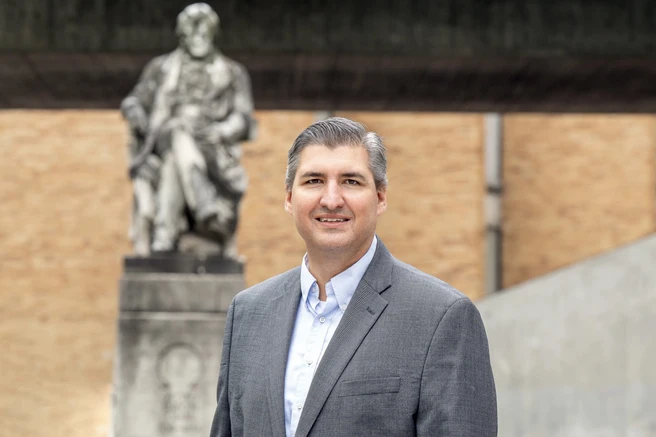
Prof. Reinaldo Tonkoski jr. kam 2023 als Leiter des Lehrstuhls für Elektrische Energieversorgungsnetze an die TUM. Er bringt eine globale Perspektive auf die Herausforderungen und Chancen nachhaltiger Energiesysteme mit. Seine Leidenschaft für Energiesysteme, Bildung und Kollaboration zeigt sich in seinen Initiativen