

Rail and Urban Transport M. Sc. (GIST/TUM-Asia Singapur)
Transport planning is becoming increasingly complex. With autonomous vehicles, electric vehicles, machine learning, and big data coming into the mix, the transport industry is on the cusp of a new revolution, facing an unprecedented combination of new and old technologies as new priorities emerge. At the crossroads between traditional and modern-day vehicles, transport planners play an even more critical role in marrying the slew of divergent needs to develop a sustainable transport system. Amid rising calls to reform the transport sector, rail transportation remains the gold standard for carbon efficiency for many emerging and burgeoning cities to avoid further traffic gridlocks and pollution.
The TUM Master of Science in Rail and Urban Transport conducted under TUM Asia in Singapore is designed to equip students to meet these challenges. The program offers two specialisations (Rail and Transport), both of which are designed to equip students to meet the evolving railway and transport demands for the future.
| Type of Study | Full Time | Main Locations | TUM Asia Campus in Singapur |
| Standard Duration of Studies | 4 Semester | Application Period | Winter Semester: 01.10. – 31.03. |
| Credits | 120 ECTS | Required Language Proficiency | English |
| Start of Degree Program | in August | Costs | Tuition Fees |
The specialisation rail is designed for engineers pursuing a specialised career in rail engineering. Graduates specialising in railway will be highly needed globally for the deep level of knowledge in rail engineering to construct, design, renew and maintain a range of urban rail tracks and infrastructure. They will be able to work in the following areas (but not limited to): Rail Project Manager, Rail Consultant, Safety and Maintenance Rail engineer, Rail Operations, Rail Design Manager, Researcher.
The specialisation transport is offering an in-depth study on the planning, design and operation of modern passenger transport systems, the programme includes specialised topics such as telematics, modelling, and simulation to develop sustainable mobility solutions for urban cities. Graduates specialising in transport will be trained to put the stakeholders at the heart of the planning process and deploy the various analytical approaches and methodological tools to develop innovative mobility solutions for the new transport areas. Graduates will be able to work in the following areas (but not limited to): Transportation Planner, Transportation Analyst, Infrastructure Planner, Road Project Engineer/ Manager, Highway/ Road Engineer, Transportation Operations Manager, Researcher.
Students of the Rail and Urban Transport (M.Sc.) Master’s degree program at TUM Asia learn to develop and implement transport and rail systems that meet the diverse requirements of sustainable mobility.
The program deepens students’ engineering knowledge from an interdisciplinary perspective and develops it further with a view to transport and rail traffic planning. Students acquire specific skills that enable them to develop and implement advanced solutions for the effective and efficient management of various transportation and rail systems. Building on a set of core modules in areas such as statistics, process analysis and management, or modelling and simulation, students can specialize in the areas of “Rail” or “Transport” according to their interests and professional aspirations. A compulsory internship enables students to apply their knowledge in business practice.
Graduates of the degree program are experts in developing sustainable transport infrastructures. They are able to recognize the complex and possibly conflicting demands on (urban) transport systems and to develop technically adept and socially responsible approaches to solving them in order to implement socially, ecologically, and economically sustainable structures. Thus, they are just as well qualified to continue their academic work within the framework of a dissertation as they are for taking on responsible positions in transport and infrastructure companies, in consulting, or in public administration.
Study Structure
The MSc in Rail and Urban Transport, totalling 120 ECTS, spans 4 semesters over 2 years, comprising a combination of core and elective modules (75 ECTS), a 3-month internship (15 ECTS), and a Master’s thesis (30 ECTS).
Course Content
The successful management of rail and urban transport in cities today requires innovative and sustainable transport strategies and solutions. To meet the evolving demands, the Master of Science in Rail and Urban Transport seeks to deepen students’ engineering skill set with multidimensional insights and know-how to design progressive solutions in managing various transport and railway systems effectively and efficiently. Featuring two specialised tracks in Rail and Transport, the programme offers students two interrelated yet distinct personalised roadmaps that equip them with advanced engineering knowledge through the lens of multiple disciplines to address the transport needs for modern societies.
The master consists of core modules which are compulsory for all students, followed by core and electives modules for each specialization. At the final stage of the study, students are required to do an industrial internship and write a master thesis.
For information about the course structure please refer to this page and click on “Course Structure” or download the programme brochure here: Programme brochure
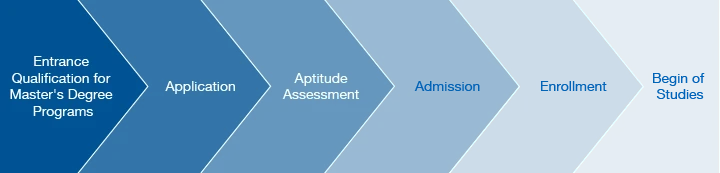
Online applications are submitted via the TUMasia application portal.
Instructions for applying for a master's program: Detailed information on the application process (step-by-step instructions)
The legal basis for the application is the Subject Examination and Study Regulations (FPSO).