
Civil Engineering B. Sc.
Civil engineering consists not only of designing and executing structural works but also of all activities concerned with the procurement and development of statutorily designated space and the provision of utility services. The work of civil engineers can thus primarily be described as designing structural elements, drawing up the respective calculations, and executing plans, whereby environmental technology is a rapidly growing field of work.
Due to both ecological and economic reasons, the work performed by civil engineers is the most widely diversified of all engineering professions, and course graduates find employment at public authorities, government departments, engineering firms, the building industry, construction sites, and in the human resources departments and design offices of processing industries.
| Type of Study | Full Time | Main Locations | Main Campus Munich |
| Standard Duration of Studies | 6 Semester | Application Period | Winter semester 15.05. – 15.07. |
| Credits | 180 ECTS | Required Language Proficiency | German |
| Start of Degree Program | Winter Semester (October) | Tuition Fees | Semester fee, Fees for Students from Non-EU Countries |
During the first semesters, mathematical and natural science fundamentals are taught. They provide the basic toolkit for civil engineers in the fields of mathematics, applied mechanics, materials science, computer science and surveying. On this basis, students acquire the skills needed in the process-oriented and constructive activities of civil engineers. These include the organisation of workflows, the dimensioning of construction materials, foundation mechanics and the basic principles of statics and structural engineering. Based on this knowledge, students gain in-depth insights into the fields of solid construction, timber construction, steel construction, hydraulic engineering, transportation technologies and planning, depending on their personal interests and passions.
Graduates possess sound foundational skills in and knowledge of engineering and the natural sciences. You understand the most important structural-physical phenomena, can make associated calculations, and have grasped how these phenomena interact with construction processes. Your skills enable you to plan all major types of construction and present the appropriate certificates for various building materials. Further, you are able to make basic structural calculations. You can use current programs, or programs you have written yourself, to support your work, and visualize your work with the help of CAD drawings.
Independent of your elective modules, you also possess deepened knowledge of individual disciplines. These include, for example, hydraulic engineering, urban water management, transportation technologies and engineering, and geotechnics; or specialized disciplines devoted to foundation engineering, or to structures built in concrete, metal or wood.
Given the interdisciplinary nature of the program, you can also call upon further transferable competencies. You have knowledge of construction planning, structural and civil engineering, construction logistics and production planning. You are conscious, too, of the underlying legal and economic conditions of your field of activity. You work in a solution-oriented manner in teams and can also enter independently into any cross-disciplinary area of civil engineering.
If you decide to embark on a career after graduating from the bachelor's program, various options become available to you. In addition to construction firms, engineering consultancies and the building materials industry, further fields of activity include real estate markets and transportation companies. You can also take up a position in public administration.
Study structure
Students familiarise themselves in the first and second semesters with the principles of mathematics and the natural sciences: mathematics, applied mechanics, materials science, computer science, and surveying.
Building on these acquired fundamentals, the aim of the subsequent four semesters is to introduce students to the diverse subject matter of civil engineering. They have the opportunity to familiarise themselves with the full breadth of civil engineering and tailor their interests and talents to different professional profiles.
Students complete a bachelor's thesis in their chosen subject during the sixth semester. This facilitates entry into a master's program at the Technical University of Munich or into a master's program in another related discipline.
Course Content
The bachelor's degree program comprises a total of 6 semesters. The first 4 semesters represent a foundation phase in which the general basic knowledge of civil engineering is taught. In the 5th semester, there is an initial focus phase for a subject area, which ends in the specialisation phase in the 6th semester. Over the entire course of study, 180 credits must be earned, of which the compulsory and elective modules, as well as the Bachelor's thesis, are divided as follows:
- Compulsory modules: 125 credits
- Elective modules: 40 credits
- Bachelor thesis: 10 credits
- General education subjects: 5 credits
The focus of the program is determined by the major profile chosen in the 5th semester. There are 3 profiles to choose from: 1. constructive (building), 2. water (environment), 3. transport (infrastructure), from which a preferred major profile (field of study) is chosen. The remaining profiles form the minor profiles. 10 credits must be chosen from the main profile and at least 5 credits from each minor profile. The remaining 10 credits of the 5th semester can be freely used by students in the form of elective modules to further deepen their other interests or one of the chosen minor profiles. The 6th semester is intended for the completion of the bachelor's thesis. This has a scope of 10 credits and represents an initial in-depth study of a subject area. In addition to the bachelor's thesis, general education subjects totalling 5 ECTS credits are required to be completed. The general education subjects give students the opportunity to acquire competencies outside the subject areas of engineering.
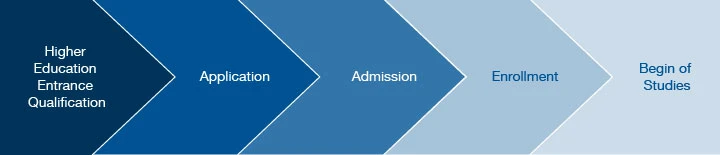
The degree program always begins with the first semester in the winter semester. It is an open-admission program and includes a fundamentals examination at the end of the first semester.
Applications for the summer semester are possible for transfer students; however, admission to a higher semester must be approved by the school. Please contact the program’s academic advising office prior to the application.
Please note that the BSc programme in Civil Engineering at TUM is taught entirely in German.
Apply easily via the user-friendly TUMonline application portal and upload your documents for admission there.
Support: step-by-step instructions for applying to a bachelor's program and Application Info Portal
Legal Notice: The basis is the program-specific Academic and Examination Regulations (FPSO) and the Statutes on Aptitude Assessment.
The primary target group for the Bachelor's program consists of prospective high school graduates from both Germany and abroad.
The formal requirements are:
- A university entrance qualification (such as the German Abitur or an equivalent diploma from a foreign school system)
- Proof of sufficient German language proficiency
- A relevant preliminary internship of at least 6 weeks
- Higher Education Entrance Qualification
- Proof of German Language Proficiency
- Evidence of at least 6 weeks of relevant practical experience
- Complete and Current Résumé
- Passport
- Preliminary Documentation (VPD) by uni-assist - for international applicants only
We may require additional documents depending on your educational background and your country of origin. Complete the online application to receive a comprehensive list of the required documents.
Please consider the specific requirements for documents for application and enrollment at TUM.
- Application for Enrollment (signed)
- Higher Education Entrance Qualification (authentic document)
- Most Current Photo (as for ID)
- Digital notification of your health insurance status from a German public health insurance provider (requested by applicant)
We may require additional documents depending on the type of educational background you earned and your country of origin. After accepting an offer of admission in TUMonline, you will receive a list of documents you must submit to TUM in hardcopy for enrollment.
Please consider the specific requirements for documents for application and enrollment at TUM.
The period between admission and the start of studies is often packed with organisational tasks. Both TUM and the students themselves offer some support during this time.
Preparatory Mathematics Courses
For incoming bachelor’s students, preparatory courses in mathematics are offered to refresh school-level content and prepare students for the expectations of the first semester. These courses take place directly before the start of lectures and participation is, of course, voluntary. The School of Computation, Information and Technology will announce dates and registration details in due time.
Pre-Internship
It is strongly recommended to complete as much of the mandatory internship as possible before starting your studies. Later on, the lecture-free period will be needed for exam preparation, exams, and possibly some vacation, so time may become tight. Information about the mandatory internship can be found here.
First-Semester Introduction
On the first day of lectures, there will be a comprehensive introductory event along with many other activities organised by the student representatives. All admitted first-semester students will receive an invitation via email from the Student Council – Fachschaft Bau Geo Umwelt. Further information for first-semester students is available on their website.
Fundamentals Examination (GOP)
Three exams from the first semester, totalling 25 credits, have stricter examination requirements. Students who fail the GOP will be deregistered from the program.
The GOP modules are:
- Higher Mathematics 1
- Engineering Mechanics 1
- Construction and Environmental Informatics
In general, students have only two attempts for these exams. The first attempt takes place immediately after the lectures conclude. Results are announced quickly, and the second attempt is scheduled before the start of the second semester.
Students who pass two out of the three exams and fail only one twice are granted a third and final attempt after the third semester. In this case, it is strongly recommended to attend the lectures and exercises for that subject again.
After the GOP – Study Progress Monitoring
Except for the GOP, all other exams in the program have no limit on the number of attempts. However, there are minimum progress requirements that must be met:
- After the 3rd semester: at least 30 credits
- After the 4th semester: at least 60 credits
- After the 5th semester: at least 90 credits
- After the 6th semester: at least 120 credits
- After the 7th semester: at least 150 credits
- After the 8th semester: at least 180 credits
Students who fall below these thresholds will be deregistered from the program. The 8th semester threshold is flexible, and a 9th semester may be granted as a grace period for final retakes.
Profiles (4th and 5th Semester)
In advanced semesters, specialized professional competencies are organized into so-called profiles.
The profiles and their modules are:
1. Structural Profile
- Basic Module in Timber Construction (5 credits)
- Introduction to Steel Construction (5 credits)
2. Water Profile
- Basic Module in Hydraulic Engineering (5 credits)
- Basic Module in Urban Water Engineering (5 credits)
3. Transportation Profile
- Basic Module in Traffic Engineering and Transportation Planning (5 credits)
- Basic Module in Construction of Road and Rail Infrastructure(5 credits)
Students choose one main profile by completing both modules (10 credits). From the other two profiles, only one module (5 credits each) is required. The chosen profile becomes the main profile, while the others are considered secondary profiles.
Advanced Elective Modules
Additionally, a comprehensive catalogue of advanced elective modules is available. These deepen specific aspects of the program that were already introduced in the core and profile modules. Students select modules totalling 25 credits based on their interests.
The list of advanced elective modules can be found in the corresponding category in TUMonline. Free selection outside this catalogue is not permitted.
General Education Courses
Throughout the program, students must complete 5 credits from the general education course catalog. These include modules on soft skills, contextual competencies (e.g., sustainability, society), TUM project weeks, and a limited selection of language courses (please refer to the catalogue in TUMonline).
General education courses are the only category in the program that is recorded in the final transcript without a grade (i.e., only as “Passed”).
Bachelor’s Thesis
The program concludes with a final thesis, the bachelor’s thesis. Detailed information is available here.
Application Periods
- Winter Semester: May 15 – July 15
- Summer Semester: November 15 – January 15 (only for transfer students)
Exam Registration
- Winter Semester: November 18 – January 15
- Summer Semester: May 26 – June 30
Requests to the Examination Board
- Winter Semester: March 31
- Summer Semester: September 30
Please note that the bachelor’s programme in civil engineering at TUM is taught entirely in German
Timetables
SuSe 2026
2nd semester | 4th semester | 6th semester
Changes to individual courses are possible!
Please check TUMonline for information on when and in what form your course will take place!
WiSe 25/26
1st semester | 3rd semester | 5th semester
Examination schedule
The dates for compulsory examinations are usually planned one semester in advance and can be viewed on TUMonline at the start of the lecture period. The following PDF provides an overview only. Only the dates listed on TUMonline are binding.
Please check the current exam date and location in TUMonline. You must register for all exams via TUMonline.
General Study and Examination Regulations (APSO)
This is the overarching set of rules that applies to all degree programs at TUM.
Updates are published regularly on the TUM website.
Academic and Examination Regulations (FPSO)
Study start from WiSe 24/25 | Study start from WiSe 19/20 | Study start from WiSe 18/19 | Study start from WiSe 16/17 & 17/18 | Study start from WiSe 13/14 until 15/16 | Study start from 08/09 until 12/13
To participate in the examinations, please refer to the examination board's information sheets on hardship cases and illness during the examination period. You must register for the examinations in TUMonline:
- Information sheets on hardship cases and illness during the examination period
- Regulations for rebooking elective modules
Exams usually take place outside of lecture periods. Approximate exam periods are given here. Due to room availability and other constraints, these periods may be subject to change. The current exam dates are available in TUMonline.
Bachelor’s Thesis
The bachelor’s thesis is the final project of the Bachelor's degree program. It represents the students’ first independent scientific work. It concludes with the submission of a written report and a presentation.
Eligibility and Registration Deadline
Students are automatically eligible to begin their bachelor’s thesis once they have earned 120 credits. After becoming eligible, they have 12 months to officially register the thesis.
The key date for reaching the required credits is the meeting of the examination board for the respective semester in which the credits were achieved. The dates can be found [here].
Choosing a Topic
The topic must be assigned and supervised by a chair with examination authority for the final theses in Civil Engineering. Students choose the subject area based on their personal interests and then independently contact a potential supervisor. Many departments list available topics on their websites (see list below), but are generally open to students' suggestions for their own topics.
A bachelor’s thesis may also be completed externally at a company or a foreign university. However, official supervision must still be provided by one of the authorized chairs at TUM.
A selection of chairs offering theses can be found here:
Thesis Registration
The start and completion of the bachelor’s thesis must be registered with the Civil Engineering Examination Office. Registration is carried out by the supervising chair. Students only need to present a transcript showing they have earned the required credits to their supervisors for eligibility.
Thesis duration
From the registration date on, students have five months to complete and submit the thesis document. After submitting the document, the students give a presentation on the thesis findings to their supervisors.
Submission and Transition to Master’s Program
If the bachelor’s thesis is the final requirement of the degree program, students may transition to a master’s program afterward. However, the thesis must be submitted and graded in time. The deadlines to ensure graduation within the current semester are:
- Summer Semester: 30 September
- Winter Semester: 31 March
The official submission date is the day the written report is handed in to the supervising department. The time until the final presentation does not count toward the five-month duration of the thesis.
General information about the bachelor’s thesis can be found here.
An internship must be completed as part of the bachelor's degree program. It is highly recommended that a large part of the mandatory internship should be completed before the start of the program. Since the lecture-free period will later be needed for exam preparation, exams, and perhaps some vacation time, it could be tight.
Contact person Internship Office
Regina Jourdan, M.A.
Arcisstr. 21, Room 3131
Tel.: +49/89/289-23954
E-Mail: praktikantenamt.cee@ed.tum.de
Portal: Internship Office BGU
Office Hours:
- Tuesday: 10:00 - 11:00 am - telephone consultation only (no public access)
- Wednesday: 2:00 - 4:00 pm
- Thursday: 8:00 - 10:00 am
Internship
In order for the internship to be recognized, proof of completion of the entire internship must be submitted online via the Internship Office portal. Once the internship has been recognized, notification of recognition will be sent to the student by email (or collected in person) and entered into TUM Online.
Incomplete documents and paperwork sent to the Internship Office by email or post cannot be processed!
Fact sheet and information
Information and factsheets about the internship can be found on the Internship Office website.
Civil engineering machinery internship for civil engineering students
The Bavarian Construction Academy offers practical courses in construction machinery technology for students at Bavarian universities.
Schienenjobs.de is a specialist online job board and information platform for everything related to rail-based mobility.
In addition to the well‑known Erasmus+ program, TUM students have access to various other exchange opportunities. You can find detailed information in the TUM Wiki for your degree program under “Going on Exchange – Wege ins Ausland.”
Are you a student from a foreign university and interested in spending time at TUM?
Please consult the TUM Wiki under “Coming to TUM on exchange"
Please note that the bachelor’s programme in civil engineering at TUM is taught entirely in German
Civil Engineering at TUM
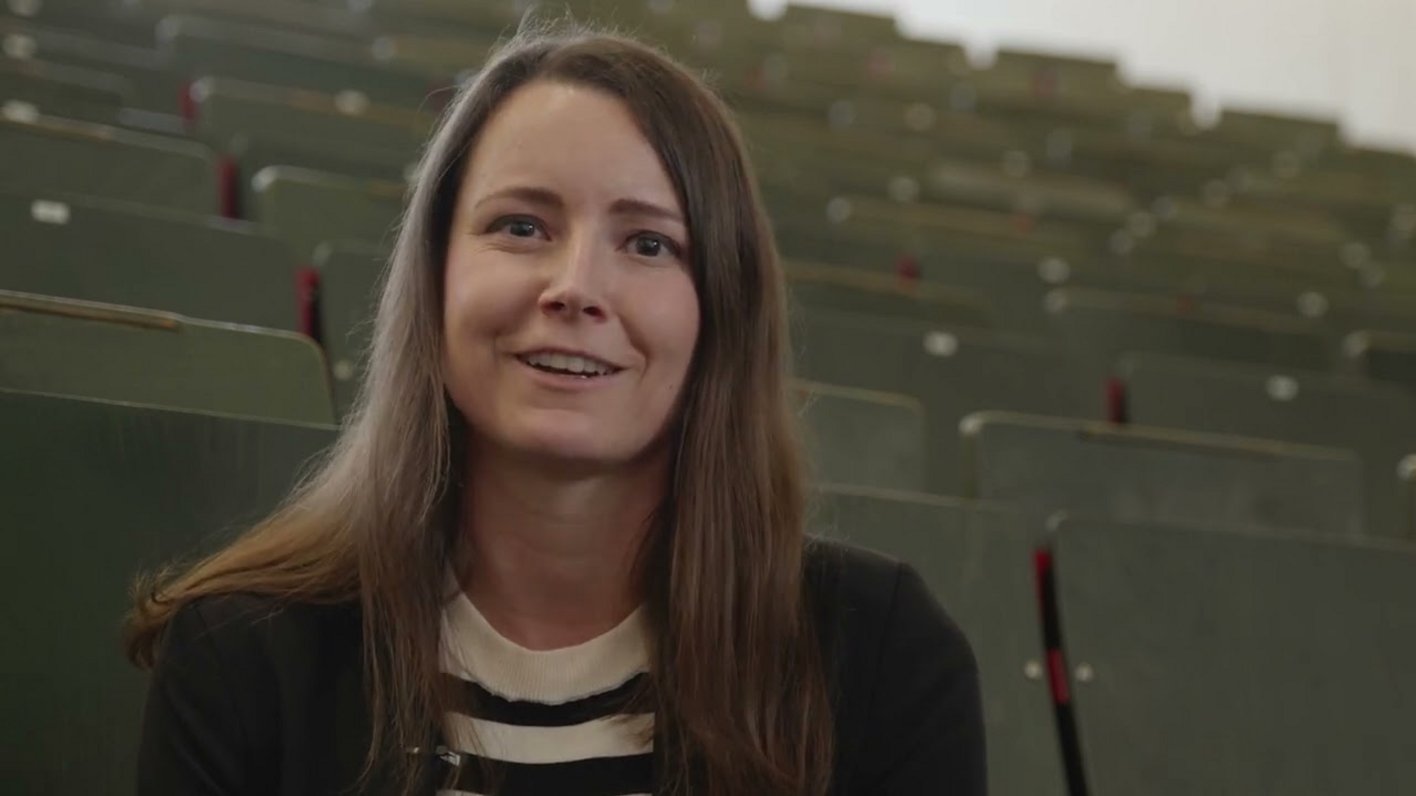
The Civil Engineering degree programme at TUM combines civil, environmental and geoengineering sciences. Prof. Dr. Fischer talks about creativity in civil engineering, while student Julia Zimmermann emphasises the wide range of opportunities offered by the course. Video: Holger Fleig / TUM
Interview with Anne Pape: Test Field for Timber Construction at TUM

Anne Pape studied civil engineering at the Technical University of Munich (TUM). She currently works at the Timber Testing Facility, part of the Testing Institute for Construction Engineering, where she tests structural and composite components made of engineered timber. In this interview, she talks about her work as a civil engineer, her studies, and her future plans. Image: Cornelia Freund / TUM