
Materials Science and Engineering
The master's program in Materials Science and Engineering focuses on science-oriented, interdisciplinary engineering education with a view to materials science.
The main objective of the program is to enable you to physically and mathematically model complex technical and physical processes and systems, taking into account the materials used. The current paradigm shift - away from deterministic models towards predictive science - is to be taken into account: Students are taught a probabilistic view of the material properties of physical and engineering systems, and thus the need for stochastic modeling, from the very beginning. This has not yet been consistently incorporated into teaching, so that this approach is one of the unique selling points of the Master's program in Materials Science and Engineering.
| Type of Study | Full Time | Main Locations | Garching, Munich |
| Standard Duration of Studies | 4 Semester | Application Period | Winter semester 01.04. - 31.05. |
| Credits | 120 ECTS | Required Language Proficiency | English |
| Start of Degree Program | Winter Semester | Tuition Fees | Semester fee, Fees for Students from Non-EU Countries |
In response to the new challenges of contemporary society, there is an ever greater intertwining of expertise in the natural and engineering sciences. Modern education in the engineering sciences must, in turn, prepare students not only in classical disciplines, serving the needs of specific industries, but it must also address the need for interdisciplinary training.
The master's program in Materials Science and Engineering rises to this challenge by offering a scientific, interdisciplinary education in engineering, involving a total of seven departments (BGU, Chemistry, Electrical Engineering and Information Technology, Informatics, Mechanical Engineering, Mathematics and Physics). Key objectives of the program include, enabling students to physically and mathematically model complex technical-physical processes and systems accounting for the materials to be employed, that is, to theoretically comprehend and apply the fundamental disciplines of engineering and to chemically and physically describe them. Additionally, the program accounts for the current paradigm shift away from deterministic models towards predictive science. It is this that makes the TUM MS&E program unique, as it is designed to give students a probabilistic view of the material properties of physical and engineering science systems from the start and, thus, to convey the necessity of stochastic modeling, which has not yet made its way into the curricula of other programs.
Upon successful completion of the master’s degree program in Materials Science and Engineering, students
- have in-depth knowledge of modeling, calculation, prediction, monitoring and testing of innovative material solutions for complex applications across all technology sectors;
- recognize the need for the quantification of predictive quality, the probability distributions of results, and the quantification of risk and uncertainty;
- are able to design and implement scientific and interdisciplinary projects in the field of materials science as applied in the engineering disciplines;
- and have acquired the methodological and cognitive skills that enable them to develop and carry out research in this field or, alternatively, to seamlessly progress to doctoral studies.
Graduates are qualified to pursue opportunities in research, development, and teaching at research institutions and universities, as well as in interdisciplinary industries, such as the aerospace and energy sectors, medical technology, testing, measurement and monitoring technology and other sectors in which interdisciplinary engineering plays a central role.
In the first part of the program (semesters 1 and 2), students acquire sound fundamental disciplinary knowledge. In required modules, offered exclusively in English, students are familiarized with materials science, multi-scale models, numerical methods, non-linear fluid and solid mechanics and the quantification of uncertainties.
In the second part of the program (semesters 2 and 3), students begin to focus their studies to specialize in one of four areas: Multiscale Material Principles, Materials in Engineering Applications, Uncertainty Quantification & Mathematical Modeling and Material Characterization, Testing & Surveillance. Specialization is completed in two stages: In Area I (specialization specific), students select modules for their elective studies from a limited set of offerings listed in the module catalog. In Area II (individual elective), students select from a broad range of elective modules to suit their specific desired focus. Sample curricula for each of the four areas of specialization are available for your perusal. Modules from both areas I and II are taught chiefly in English, otherwise in German.
Fundamental disciplinary training and specialization are supplemented with scientific skills modules (recommended in semesters 2 and 3), as well as with required and elective internship modules in practical scientific work. The Advanced Research Internship (recommended in semester 3) which can be completed at international partner institutions and can prepare students for their master's thesis or doctoral degree, is a special feature of the program. Integrated into an established research team, students prepare a scientific paper under supervision, which ideally results in their first independent contribution to the scientific discourse in their area of research. Required and elective modules are taught in English or German.
The program concludes in semester 4 with the master’s thesis module. The thesis should be written in English.
A stay abroad is explicitly recommended for students and is offered either as part of the Advanced Research Internship or in the specialization phase in the third semester.
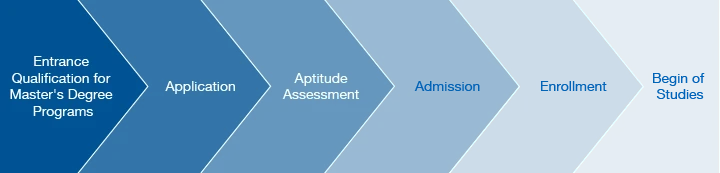
Apply via the TUMonline application portal and upload your documents for admission there.
Instructions for applying for a master's program: Detailed information on the application process (step-by-step instructions)
More information on the application process: Application Info Portal
The legal basis for the application is the Academic and Examination Regulations
As a prerequisite for applying for the Master´s Program Materials Science and Engineering, the following is necessary:
- a bachelor's degree of at least six semesters, obtained at a German or foreign university or a degree of at least equal value in Engineering Science, Civil Engineering, Mechanical Engineering, Electrical and Computer Engineering or comparable study programs, e.g. Physics or Materials Science.
- sufficient knowledge of English. Information about the accepted certificates and the requiered level can be found here.
- upon receipt of a reasoned request, students who have earned at least 140 credits in one of the above-mentioned bachelor’s programs, may be accepted to the master’s program. Proof of graduation with a bachelor’s degree or a corresponding proof must be furnished within one year after the start of the master’s program.
- Applicants with a degree from Bangladesh, China, India, Iran, or Pakistan will have to submit a GRE (General) Test to the Technische Universität München, with the institute code 7806, and the department code 5199. The required scores are as follows:
- Verbal reasoning: (will not be taken into account)
- Quantitative reasoning: 157
- Analytical writing: 3,0
- Alternatively, students can submit a score card of the Indian GATE test with the minimal qualifying score of the respective year.
- Degree Certificate and Diploma or Subject and Grade Transcript of Studies to Date
- Application for admission
- Transcript of Records
- Proof of English Language Proficiency
- Abstract (in English)
- Curricular Analysis
- Letter of Motivation (in English)
- Complete and Current Résumé
- Passport
- Preliminary Documentation (VPD) if the qualification for graduate studies (e.g. a Bachelor’s) was obtained outside Germany)
We may require additional documents depending on your educational background and your country of origin. Complete the online application to receive a comprehensive list of the required documents.
Please note that you may enroll in this degree program, as long as you submit the required graduation documents (transcript & diploma) within one year.
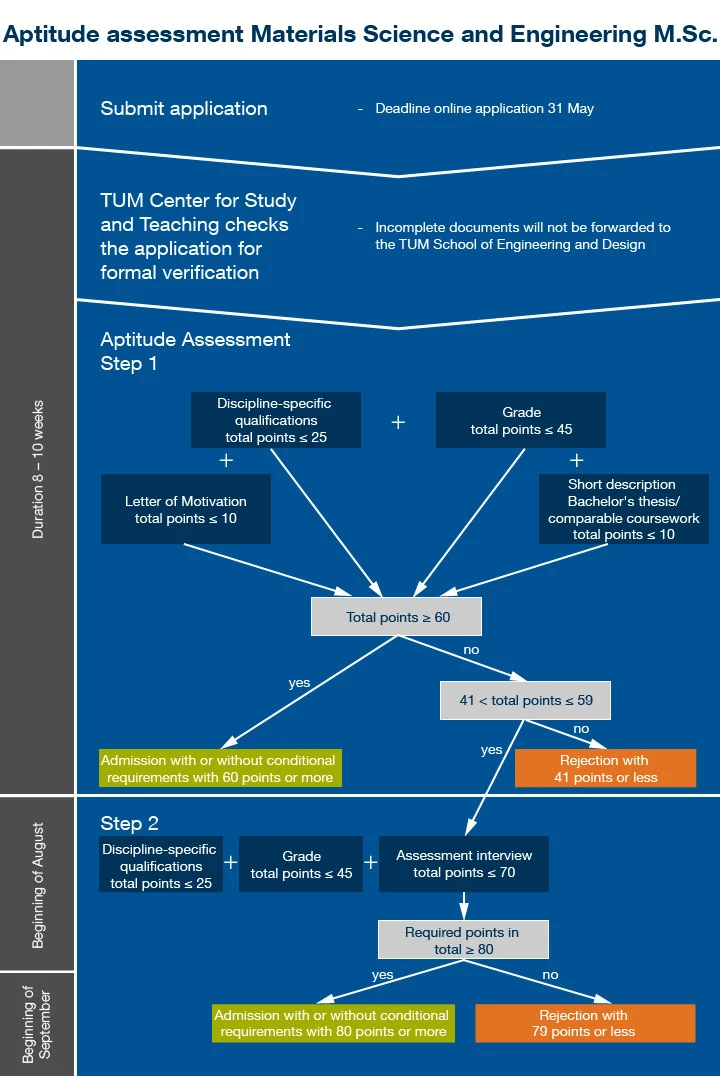
Selection takes place through an aptitude assessment procedure. The aptitude assessment is a two-part procedure after the submission of an official application to a program. In this procedure, the TUM school determines whether you meet the specific requirements for its Master’s degree program.
In the initial stages, the grades you obtained during your Bachelor’s program, as well as your written documents, will be evaluated using a point system. Depending on the amount of points accumulated, applicants are either immediately admitted, rejected, or invited to an admissions interview.
Applicants will be informed about whether they are admitted, invited for the interview or rejected after receipt of the complete application documents including the printed and signed application form. The interviews take place in June, July or August. The invitation for the interview will be sent by e-mail.
- Application for Enrollment (signed)
- Degree Certificate and Diploma (authentic document)
- Transcript of Records (authentic document)
- Most Current Photo (as for ID)
- Digital notification of your health insurance status from a German public health insurance provider (requested by applicant)
We may require additional documents depending on the type of educational background you earned and your country of origin. After accepting an offer of admission in TUMonline, you will receive a list of documents you must submit to TUM in hardcopy for enrollment.
Please note that you may enroll in this degree program, as long as you submit the required graduation documents (transcript & diploma) within one year.
Please note information provided here: besonderen Anforderungen
Current information
We have moved - you will find our offices here https://nav.tum.de/building/5515
Please write from your TUM E-Mail (not personal E-Mail address) and state your matriculation number when you contact the study office.
Students who do not have sufficient knowledge of Matlab are recommended to take the EDX Matlab course. Matlab skills are particularly necessary for some of the compulsory modules (e.g., Physics of Fluids, Probability Theory, and Uncertainty Quantification).
The Fit for TUM Service Fair (for first-year students) is expected to take place in virtual form at the beginning of October.
TUM First Steps Info Sessions (in English) cover topics such as enrollment, health insurance, finding accommodation, financing, and KVR (District Administration Office in Munich).
https://living.tum.de/listings?viewMode=list
TUM Buddy Programme
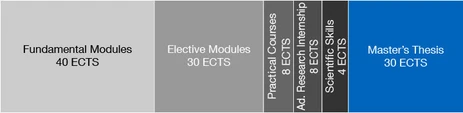
The scope of the required coursework is 120 credits, which are earned in modules and divided into 90 credits for modules (consisting of courses such as lectures, exercises, and internships) and 30 credits for the master's thesis. 30 credits should be earned each semester.
The 90 credits in the compulsory and elective areas are composed as follows: 40 credits must be completed in the fundamental modules (compulsory modules). In addition, at least 30 credits must be earned from elective modules. Of these, at least 15 credits must come from Electives I, the chosen subject focus. The remaining credits can be earned in Electives II or from other freely selectable modules.
In addition, at least 8 credits must be earned through Practical Courses. Proof of at least 4 credits in the area of Scientific Skills is also required.
Important: At least 3 of the Fundamental Modules (Appendix 1, FPSO) must be successfully completed by the end of the second semester.
Timetable
The timetable for the compulsory modules is here: Winter / Summer
Mentoring
As part of the elective modules, students choose one of the offered specializations with the advice of a mentor and put together an individual semester study plan worth at least 30 credits that corresponds to the chosen specialization and is approved by the chair of the examination board of the Master's program in Materials Science and Engineering. Any person authorized to conduct examinations in accordance with the Higher Education Examination Regulations who teaches
- Prof. Dr.-Ing. Nikolaus Adams
- Prof. Dr.-Ing. Michael W. Gee
- Prof. Dr.-Ing. Christoph Gehlen
- Prof. Dr. Alexander Holleitner
- Prof. Dr. Tom Nilges
- Prof. Dr. rer. nat. Peter Müller-Buschbaum
- Prof. Dr. Christian Große
- Prof. Phaedon-Stelios Koutsourelakis, Ph. D.
- Prof. Dr. Marco Cicalese
- Prof. Dr. Elisabeth Ullmann
- Prof. Dr. Julija Zavadlav
- Dr. -Ing Thomas Kränkel
- Prof. Dr. Jennifer Rupp
- Prof. Dr. Willi Auwärter
- Prof. Dr. Oliver Lieleg
- Prof. Dr. Christopher J. Stein
- Prof. Dr. Peter Mayr
The form for the mentor meeting, which should take place before the end of the first semester, can be found here
The general study regulations (APSO) stipulate certain milestones that you must achieve in the corresponding semesters. The following list summarizes the required number of credits you must have earned after each semester, starting with the third semester:
At least 30 credits after 3 semesters
At least 60 credits after 4 semesters
At least 90 credits after 5 semesters
At least 120 credits after 6 semesters
This effectively limits the maximum duration of study to 6 semesters. Please also note that you must pass at least one elective module by the end of the second semester.
During your studies there are times when not everything runs as smoothly as planned. Sometimes you do not pass an exam, other times the sheer amount of learning material seems unmanageable, or time is running out. We support you in all situations where you are not making the progress in your studies that you would like. Our team advises you in challenging times - so that you can successfully get through your semester and your studies. Academic coaching
Detailed information on dates relating to the semester structure, deadlines, lecture times, semester breaks, public holidays, and student council meetings.
Statutes and regulations
Study program documentation
Timetables
Recognition of exams
Registration form for recognition of credits
Guidelines for recognition of credits
General information on recognition
Registration for Advanced Research Internship (ARI)
Registration form for ARI
Assessment form for ARI
Master's thesis
Guidelines for master's thesis and master's examination
ED portal
Diploma Supplement
Application for inclusion of individual activities in the diploma supplement
Mentoring Interview
Confirmation of mentoring interview
Late registration for exams
www.tum.de/studium/im-studium/pruefungen-und-ergebnisse/
Withdrawal from exams
Application form for withdrawal from exams
https://www.tum.de/studium/im-studium/das-studium-organisieren/pruefungen-und-ergebnisse
Check TUMonline regularly for exam dates, especially shortly before the exam, to see if there have been any changes.
Please register for all courses you are taking in the semester (including projects/submission of seminar papers, etc.). This is the only way to ensure that your exam results are entered. Late registration for exams is only possible in exceptional cases.
Information on examination matter
Application form for withdrawal from exams
Compensation for disadvantages
The Examination Board is responsible for all matters relating to examinations, from applications for a place at the university and the aptitude assessment procedure to the entire administration of grades and examinations during the course of study. It meets once per semester. Applications to the examination board should be sent to mscmse@ed.tum.de.
You can apply for recognition of credits earned for parts of your studies completed outside TUM. Credits earned outside TUM will only be recognized if they are equivalent to those offered at TUM. Guidelines on how to apply for credit recognition and an application form can be found here.
Application form for credit recognition
Guidelines for the recognition of credits
You can only apply for recognition of credits after you have enrolled. An application can only be submitted once and must be made within the first year of study.
Diploma Supplement
In the TUM Diploma Supplement, students can have their individual additional activities, such as stays abroad or special projects, officially documented in addition to their course of study.
Application for inclusion of individual activities in the Diploma Supplement
Advanced Research Internship (ARI) im In- und Ausland [SE0208]
Students will be supported by their mentor when pursuing their ARI. The internship can be completed at the TUM, another university or a research institution cooperating with the TUM, and it can be completed either in Germany or abroad. The ARI should be pursued during the 3rd semester, ideally to prepare for the Master's Thesis.
Form for ARI registration
Form for ARI evaluation
The description of the module can be found here.
Partial financing is possible for internships abroad within Europe through the ERASMUS program.
The TUM School of Engineering and Design offers many opportunities for a study-related stay abroad. Good reasons for studying abroad are the broadening of one's horizons, the personality-building effect, the improvement of knowledge of the respective language, and getting to know other (subject) cultures and ways of life.
Information on applying for a leave of absence can be found on the relevant TUM page.
Please note that the application for a leave of absence must be submitted no later than the start of the lecture period of the semester in which you wish to take the leave of absence.
The master's thesis can be supervised by any expert examiner from the schools involved in the program (see below) at the Technical University of Munich:
- TUM School of Engineering and Design
- TUM School of Natural Sciences
- TUM School of Computation, Information and Technology
- TUM School of Medicine and Health (with individual permission from the examination board)
You can begin your master's thesis after successfully completing all module examinations (90 credits) – at the earliest after achieving at least 60 credits.The master's thesis is usually completed in the fourth semester after successfully passing all module examinations as an independent scientific paper on a topic from the field of materials science and engineering under the supervision of an examiner from one of the faculties involved in the program.
Guidelines for the master's thesis and master's examination
The thesis can be written abroad, but must be supervised by an examiner from TUM. Regular contact must be ensured—this must be agreed upon in advance.
The administrative process takes place in the ED portal at portal.ed.tum.de. There you can clearly view all information and submit the written thesis digitally.
Please also see: https://www.tum.de/studium/studienabschluss/abschlussarbeit/formales