Resource-efficient and Sustainable Building M. Sc.
Global challenges, such as climate change, environmental degradation, resource scarcity and demographic change, require a reorientation of the building sector. In this master's program, we provide knowledge and methods on how to sustainably redesign our cities, neighborhoods and buildings, and to reduce CO2 emissions, the use of soil, materials and water, and adapt the built environment to rapidly changing economic and social conditions.
Our offer:
- Training in a key global topic at a world-class university
- International composition of motivated fellow students
- Interdisciplinary networking of civil engineering, environmental engineering, architecture, and building and utility technology
- Team building opportunities right at the beginning of your studies
- Intensive supervision in small groups
- Strong practical relevance in all learning content and through excursions
- Studying in the heart of Munich on the TUM city center campus
| Type of Study | Full Time | Main Locations | Campus Munich |
| Standard Duration of Studies | 4 Semester | Application Period | 01.04. – 31.05. |
| Credits | 120 ECTS | Required Language Proficiency | English, German |
| Start of Degree Program | Winter Semester | Costs | Student Fees: 85.00 €, Tuition fees for international students |
Solving global challenges such as climate change, the destruction of the environment, resource rivalries, demographic change and urbanisation, as well as the challenges that these pose for our societies, are among the central questions of our time. A vital role is played here by the construction industry when it comes to reducing CO2 emissions, adapting our towns and cities, neighbourhoods and buildings to climate change, reducing the use of resources (e.g. land, material and water), and adjusting the built-up environment to rapidly-changing economic and societal circumstances.
Over and above this, roughly 66 hectares of land are approved as housing and traffic development zones in Germany every day, making them unavailable for other uses such as food production, ecological compensation areas, recreation areas or water storage. These are alarming figures given the current size of the global population’s ecological footprint, and in light of the fact that we are overtaxing our planet by more than 1½ times its biocapacity, which can already be felt today. There is an urgent need to place the management of the construction industry on an exclusively sustainable footing.
The Master Resource Efficient and Sustainable Building (RNB) programme graduates are to be able to think holistically and offer their services in resource efficient, sustainable construction as particularly well-qualified engineers, architects and planners. Given their broad-based specialist skills and their interdisciplinary thinking and working, they will help amongst other things to implement the stipulations of national and international law with regard to resource efficient construction. To this end, they will develop constructional design solutions for climate protection, which will continue to be urgently needed, and will help satisfy the increasing need to adjust buildings and neighbourhoods to face the advance of climate change.
To this end, the RNB programme graduates will have the necessary skills in drafting and planning at the scale levels of buildings, neighbourhoods, towns and cities as well as regions. They will also have detailed knowledge of the skill areas of construction physics, building services engineering, structural design and life cycle analysis that are relevant to resource efficient, sustainable construction. They will be familiar with the interactions and synergies of these fields, and will be able to apply the knowledge that they have gained in planning and implementing resource efficient buildings and neighbourhoods.
As "interface specialists", they have both the necessary abilities to optimise the resource requirements, taking account of aspects that are relevant to sustainability such as ecology, economics and sociocultural factors, as well as being able to communicate both with creative architects and planners and with analytically- and technically-orientated engineers, and to communicate their knowledge in a goal-driven and effective manner. The abilities to optimise building and neighbourhood concepts in a resource-driven, quantifiable manner on the basis of engineering methods and to effectively integrate the knowledge that they have gained into the planning process, taking the entire life cycle into account, constitute special qualifications of graduates from this programme.
The RNB creates an independent activity profile of a sustainability expert in the construction sector who is able to close the gap between classical civil engineers, environmental engineers, architects and building services engineers. Graduates from the Master’s programme in Resource Efficient and Sustainable Building will be able to analyse connections and insights related to all aspects of sustainable design and building in order to develop solutions that implement resource efficient, sustainable buildings at the interdisciplinary interface between man, buildings, infrastructure and the environment.
The following career choices are open to graduates:
- architects’, engineers’ or other planning offices
- public authorities (e.g. building and planning offices, approval authorities)
- experts, consultants
- construction companies
- industrial production
- trade and commerce
- research and teaching
- further training and development
The first semester of the degree program serves above all to provide fundamental knowledge in the four skill areas :
- Architecture, city and landscape
- Building services engineering and renewable energies
- Building physics and energy efficiency
- Building technology and life cycle engineering
The obligatory and elective modules offered here ensure that all of the program’s graduates have the core skills forming the basis for resource efficient, sustainable construction. In preparation for the interdisciplinary project, graduates of the bachelor’s program in architecture attend the module entitled “Physical principles of energy-efficient construction”, and graduates with a bachelor’s degree in engineering attend the module entitled “Aspects of sustainable urbanism”.
The above core skills are expanded upon in further obligatory modules in the second semester. The central element is the highly practical orientated “Interdisciplinary Project”, in which the skills obtained so far are implemented and expanded in teams in a design-orientated project. The focus here is placed on the interaction between the analysis, for instance of the life cycle-based resource consumption of alternative solutions, and on the synthesis in the context of the design-orientated development of energy concepts in the retrofitting of existing buildings and construction of new ones. The obligatory module entitled “Application of a life cycle analysis” is also part of the second semester, which is directly connected with the application-orientated development work carried out in the “Interdisciplinary project”. In addition to expanding specialist skills, imparting social skills, e.g., teamwork and visual, verbal and non-verbal communication, in preparation for the Interdisciplinary Project is a major element of the first semester and, along with the project, also forms a component of the second semester.
Because of the long list of options available, the third semester of the degree program offers students the opportunity to expand their specialist knowledge in a targeted manner. Moreover, the third semester offers an opportunity to both obtain and contribute specialist knowledge while spending time at other universities abroad.
The fourth semester of the degree programme focuses on the master’s thesis and the master’s colloquium.
The languages of instruction in this program are German and English. In both the compulsory and elective areas, there are subjects that are taught in German and English, so that both languages of instruction are used in roughly equal parts.
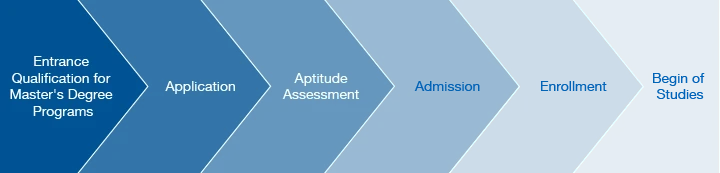
Apply via the TUMonline application portal and upload your documents for admission there.
Support: Instructions for applying for a master's program (step-by-step instructions) and Application Info Portal
Legal Notice: The basis is the program-specific Academic and Examination Regulations (FPSO).
- Bachelor's degree in architecture, civil engineering, environmental engineering, or comparable fields of study such as supply engineering (proof of a successful bachelor's degree can be submitted within one year of starting the master's program)
- At the time of application, the following must be provided:
- At least 135 credits for a six-semester bachelor's degree program
- At least 170 credits for a seven-semester bachelor's degree program
- At least 200 credits for an eight-semester bachelor's degree program
- Language certificates in German and English (the program is taught bilingually)
- Degree Certificate and Diploma or Subject and Grade Transcript of Studies to Date
- Proof of English Language Proficiency
- Proof of German Language Proficiency
- Statement of purpose (Letter of Motivation)
- Collection of Work
- Essay
- Complete and Current Résumé
- Passport
- Preliminary Documentation (VPD) if the qualification for graduate studies (e.g. a Bachelor’s) was obtained outside Germany)
We may require additional documents depending on your educational background and your country of origin. Complete the online application to receive a comprehensive list of the required documents.
Please consider the specific requirements for documents for application and enrollment at TUM.
Selection takes place through an aptitude assessment procedure. Aptitude assessment is a two-part procedure after the submission of an official application to a program. In this procedure, the TUM school determines whether applicants meet the specific requirements for its master’s degree program.
In the initial stages, the grades you obtained during your bachelor's program, as well as your written documents, will be evaluated using a point system. Depending on the amount of points accumulated, applicants are either immediately admitted, rejected or invited to an admissions interview.
- Application for Enrollment (signed)
- Degree Certificate and Diploma (authentic document)
- Transcript of Records (authentic document)
- Most Current Photo (as for ID)
- Digital notification of your health insurance status from a German public health insurance provider (requested by applicant)
We may require additional documents depending on the type of educational background you earned and your country of origin. After accepting an offer of admission in TUMonline, you will receive a list of documents you must submit to TUM in hardcopy for enrollment.
Please consider the specific requirements for documents for application and enrollment at TUM.
The program begins with a two-day kick-off event designed to help students get to know each other, build teams, and network with students in higher semesters of RNB.
At the end of October, an excursion will take place as part of the seminar “Sustainable Architecture, Urban and Landscape Planning,” with the aim of providing practical experience in sustainable urban planning.
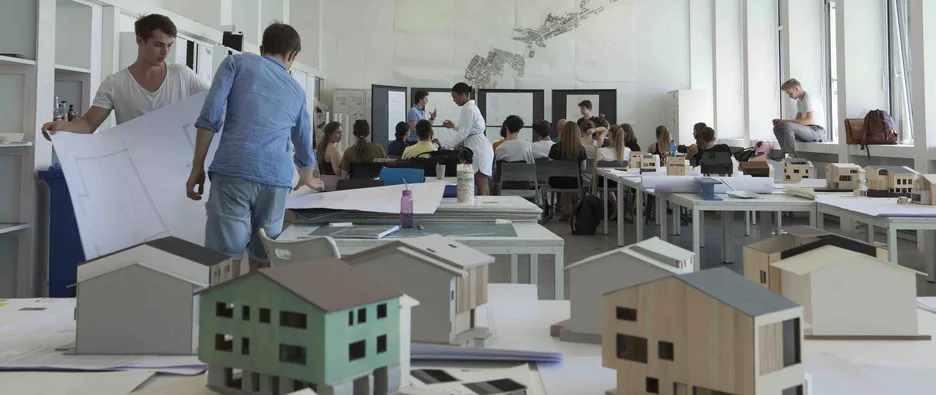
The Interdisciplinary Project (IDP) is the central component of the master's program in Resource-efficient and Sustainable Building and promotes collaboration between students from different disciplines.
The aim is to analyze complex problems in sustainable planning and construction in an interdisciplinary manner and to develop holistic, implementable solutions. Working in teams, students tackle projects involving the transformation of existing buildings and/or neighbourhoods, taking into account technical, social, ecological, and economic aspects. Continuous collaboration with various departments enables an interdisciplinary deepening of concepts and methods. Topics such as resource efficiency, energy supply, mixed use, and sustainable mobility are considered in an integrated manner.
There is a particular focus on addressing global challenges such as climate change, resource availability, and energy efficiency. The UN's 17 sustainability goals serve as guidelines for the development of sustainable strategies. Through close teamwork, students learn to combine different perspectives and resolve conflicts constructively. The aim of the project is to find well-founded and innovative answers to the challenges of a sustainable built environment.
Pre-study internships are not mandatory, but will be positively evaluated for the application. Voluntary internships in Germany or abroad can also be completed during the course of studies. If the time of the internship takes up a significant part of the lecture period, a semester off can be applied for. The practical experience is considered extremely valuable.
A mobility window is integrated in the 3rd semester. Students can either study within Europe within the framework of Erasmus+ or at numerous universities worldwide within the framework of TUMexchange and have their achievements recognized at TUM after prior consultation.